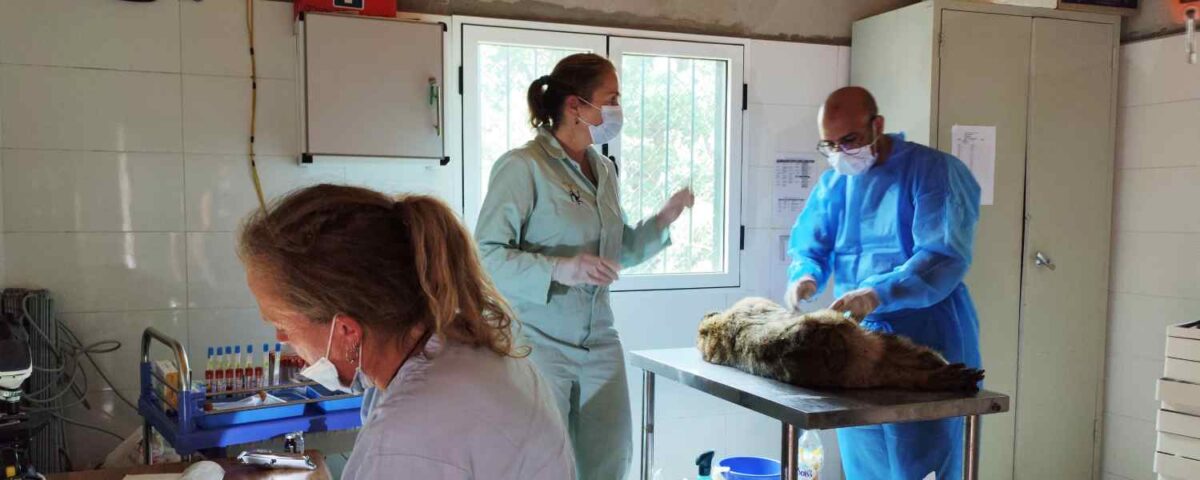
Three veterinarians stand around a table with a Barbary macaque

Towards freedom, free from disease

Woman

At the end of September, it will finally happen: The first group of Barbary macaques from our Born to be Wild project will be returned to the wild!

In 2022, 34 confiscated Barbary macaques were moved to Tazekka National Park in the Middle Atlas Mountains, Morocco. Over the past few years, a lot of hard work has gone into putting together two balanced groups. Each group was given a large section of fenced-off forest where they gradually regained their natural behaviour, including social group behaviour, recognizing danger, and finding food. 

Medical check

The final major step in the preparation is a comprehensive medical check-up. The animals must be fit and healthy when they embark on this great adventure. They must not carry any infections that could pose a threat to animals and humans in their new environment (such as tuberculosis or herpes virus).

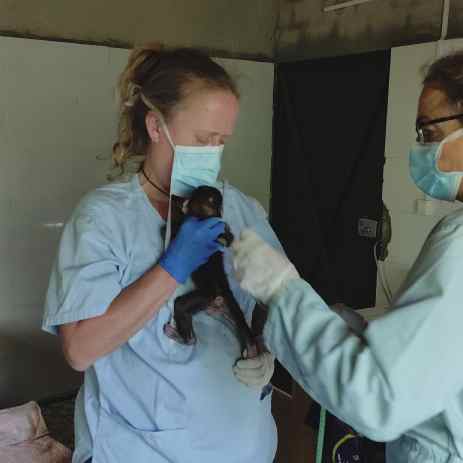
Together with Youssef, the veterinarian who looks after the health of the Barbary macaques in the Born to be Wild project, we anaesthetized and examined the 13 animals from the first group.

Woman in a surgical mask holding a baby Barbary macaque
A baby Barbary macaque is checked by the veterinarian.

Blood, faeces and hair

We collected blood, faeces and hair for virus, parasite and DNA diagnostics. The animals were tested for tuberculosis with a prick in the eyelids. If the eyelids do not swell or turn red within the next three days, the test is negative. Fortunately, this was the case for all animals. Using ultrasound, we determined that the uterus and ovaries of the females were healthy and that reproduction would be possible, which is important for the future of the group.
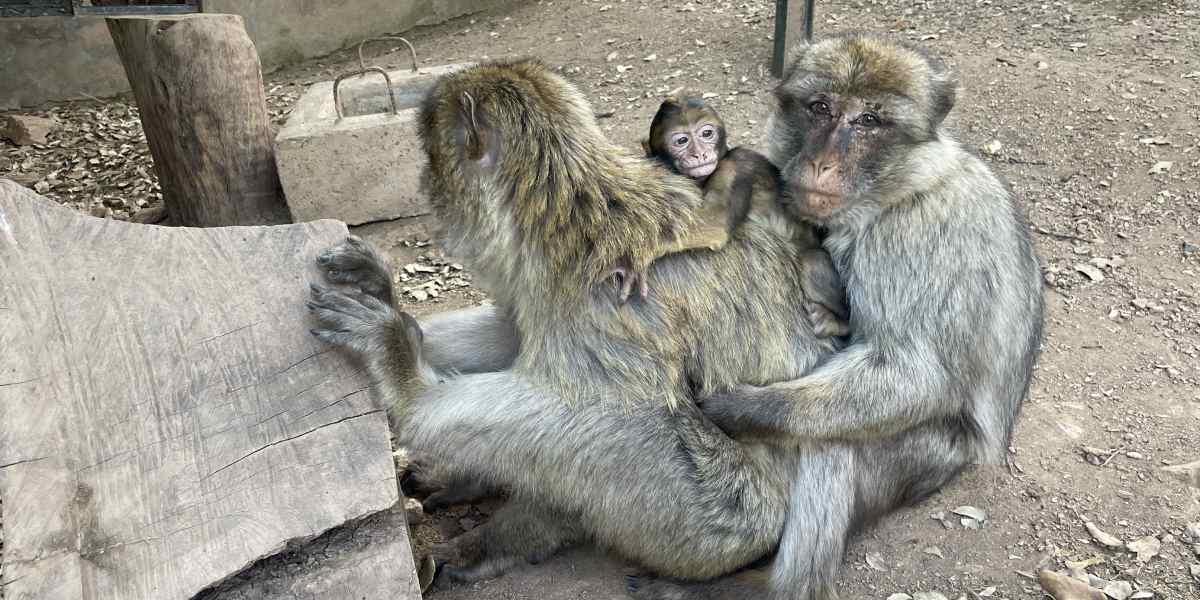
Three Barbary macaques
A group of Barbary macaques from the Born to be Wild project.

Catching the animals from their large enclosure was quite a challenge, but thanks to good preparation and patience on the part of the animal caretakers, all the animals were checked in two days. Three young babies were not anaesthetised. However, we did examine them carefully, chipped them and determined their sex, before returning them to their sleeping mothers.

Remaining test results

All animals were in good condition and ready to leave. Except for one older female, Sofia, the lowest-ranking member of the group. She had clearly not been able to scavenge enough food and was emaciated. She will be allowed to recover alongside the group until she has regained enough strength to return to the group.

Now we eagerly await the remaining test results. If all results are negative, nothing will stand in the way of this group being released into their new habitat in September, free of infection and healthy!

Hester van Bolhuis
Veterinarian

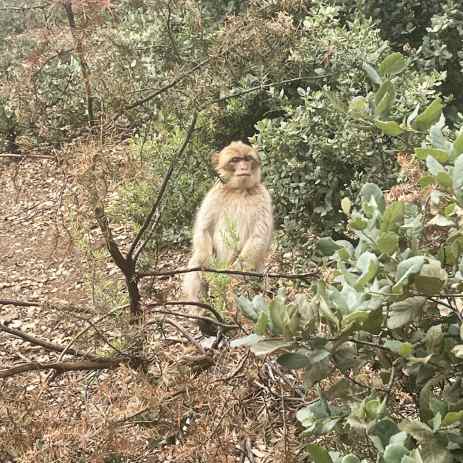
Barbary macaque in a tree
A Barbary macaque in a tree.

Born to be Wild

Read more about our Born to be Wild project in Morocco. The project ensures that the poaching of young Barbary macaques and the illegal trade in these animals stops, and that Barbary macaques are released back into the wild!

Other news