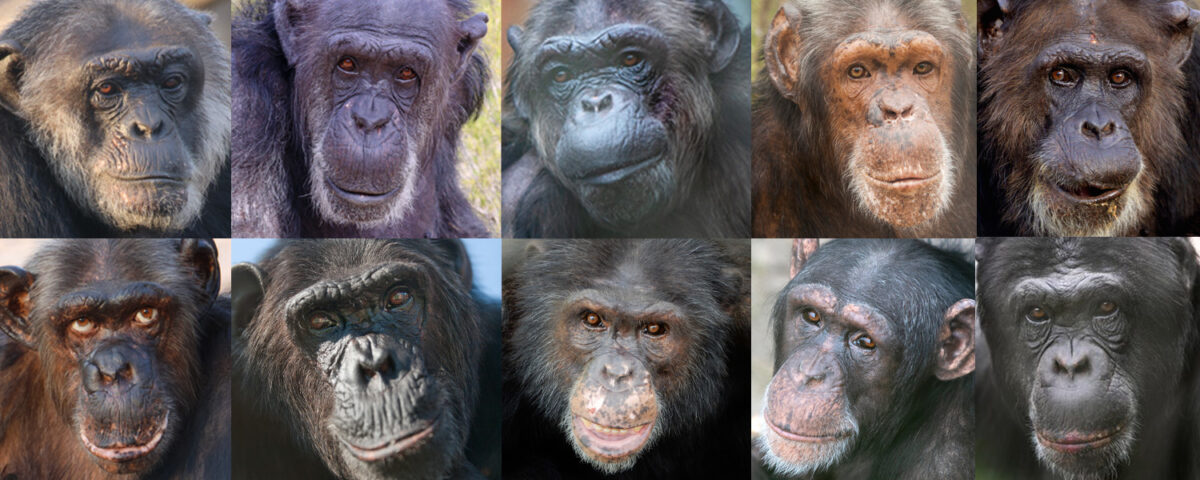
Collage of chimpanzees

World Chimpanzee Day: looking back

On World Chimpanzee Day, we reflect on the lives of rescued chimpanzees living at AAP. Their past? They spent years as pets, in the entertainment industry, or as laboratory animals.

For decades, chimpanzees have been used by humans, forced into lives that are far from natural. People may want them around — but what happens when the chimpanzees grow up and the situation becomes unmanageable?

Wild animals need their natural habitat

Although some people have normalised the idea of interaction between humans and chimpanzees, these animals are wild by nature and entirely unsuited to a domestic environment. In most cases, such interaction continues only until the chimpanzees reach puberty, around the age of 8 to 10. At that point, they become unmanageable and dangerous. While chimpanzees have a life expectancy of around 40 years in the wild, in captivity they can live up to 60. At AAP, chimpanzee Freddy even reached the impressive age of 64. Once they reach puberty and become impossible to handle, many are locked away and spend years, if not a large part of their lives, in isolation.

Chimpanzees are highly social animals, living in groups of 15 to 150 individuals, often divided into subgroups. Being confined in a domestic setting, without the company of their own kind, is a far cry from their natural habitat and fails to meet their basic needs.

Chimpanzee behind bars.
Chimpanzee Regina was rescued from a circus in 2011. She was born in Cameroon and sold when she was 12 months old.
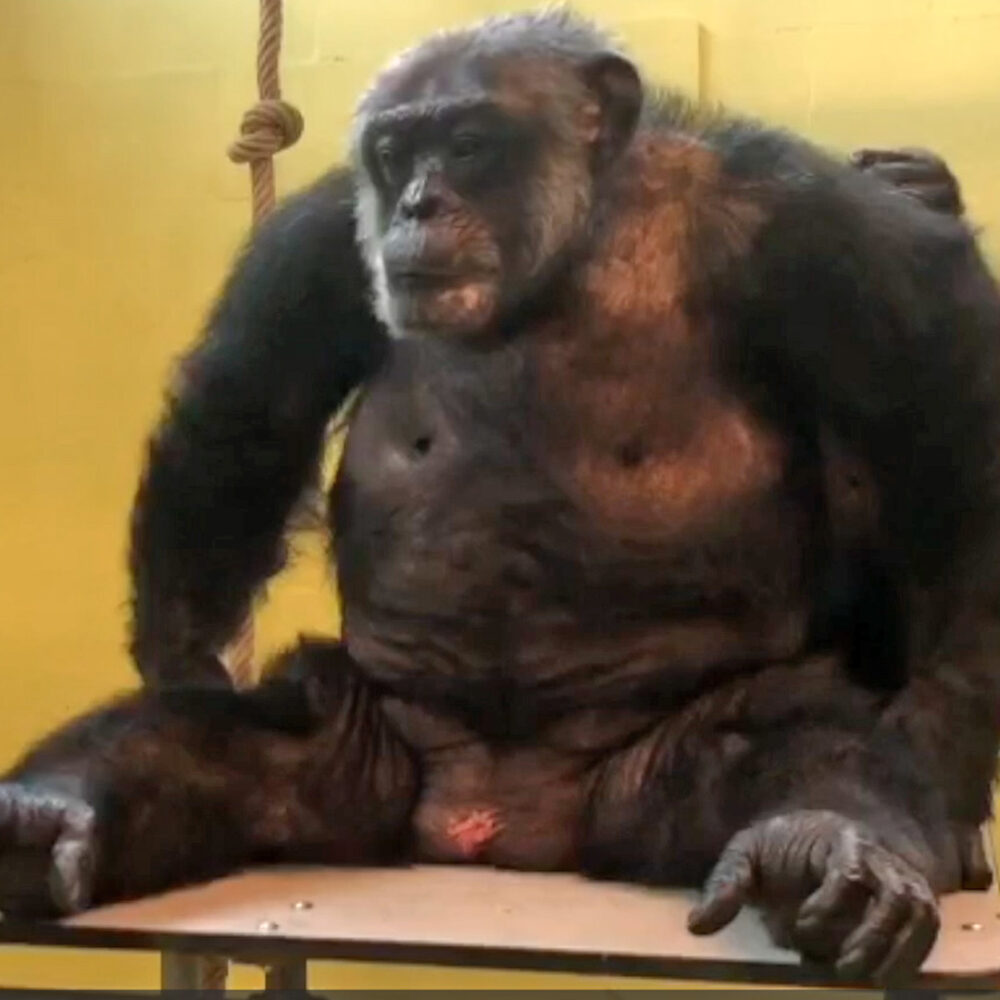
Chimpanzee sitting on a platform
Chimpanzee Tino was rescued from a circus in 2021. He was severely overweight.

Superior strength

Many people are unaware that chimpanzees are wild and potentially dangerous animals. They are significantly stronger than humans due to a higher proportion of fast-twitch muscle fibres, which allow for powerful, explosive movements. This strength makes them dangerous and unmanageable.

Most chimpanzees rescued by AAP arrive as adults, having been confined to basements or cages after revealing their true nature in domestic settings. The documentary Chimp Crazy offers a glimpse into what such situations look like.

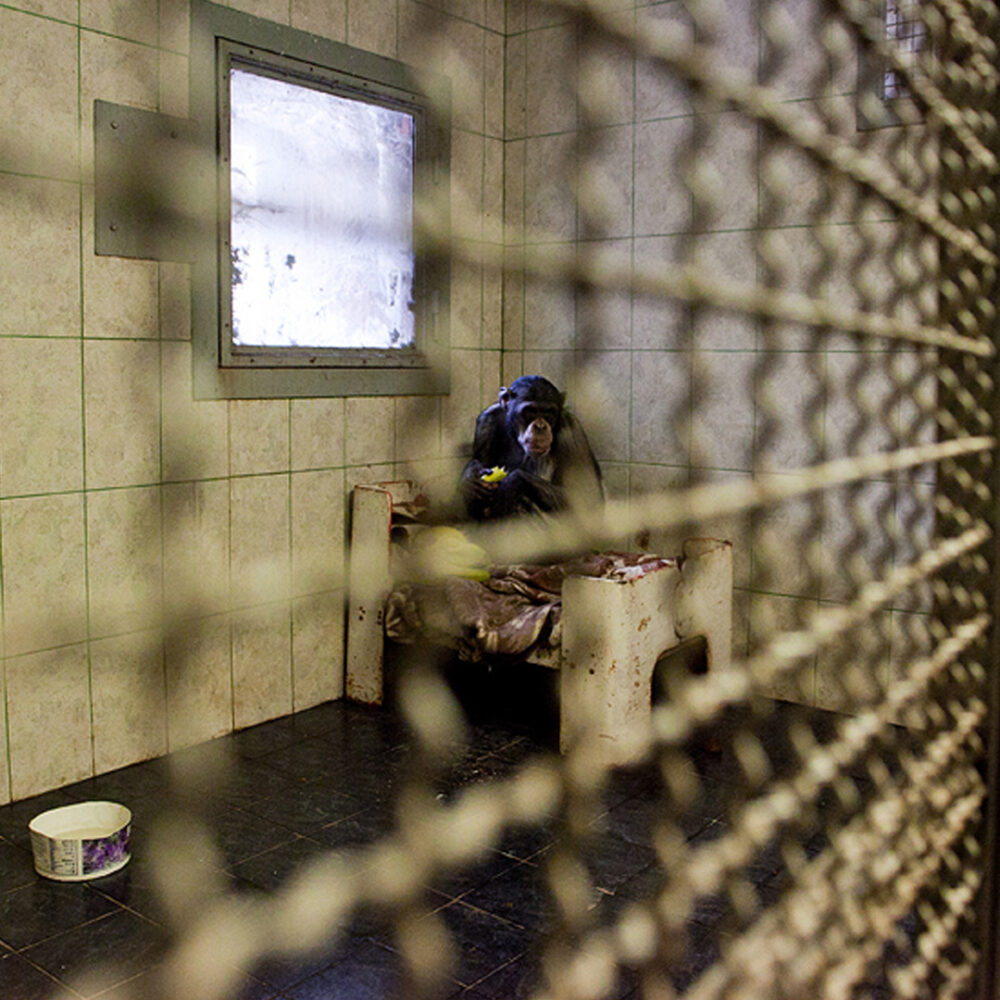
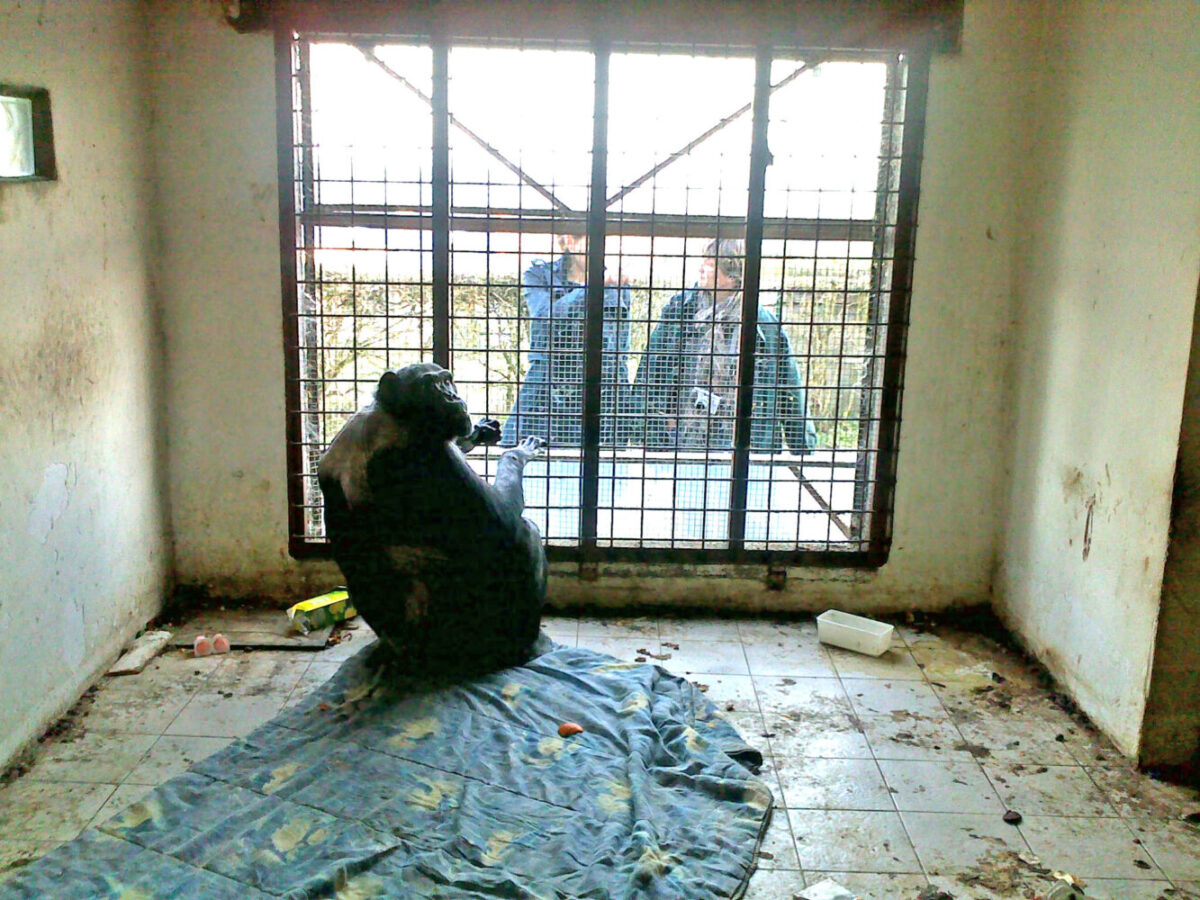
Chimpanzee sitting in a small room on a blanket.
Mojo lived in captivity, all by himself, and was fed junk food. AAP rescued him in 2011. He was never able to fully recover from his traumatic past.

Chimpanzees at AAP

Currently, 19 rescued chimpanzees live at AAP — 15 in the Netherlands and 4 in Spain. They range in age from 30 to 45 years. In addition, our rescue centre in the Netherlands is home to another group of 19 chimpanzees who were formerly used in laboratories.

Many of the rescued chimpanzees suffer from behavioural issues caused by their time in captivity. Some blow kisses to attract attention, struggle to interact with their own species, or suffer from serious eating disorders.

Although they are now safe and live among fellow chimpanzees in a suitable environment, it saddens us to know that — due to human selfishness — they will never experience the life they truly deserve.

Other news