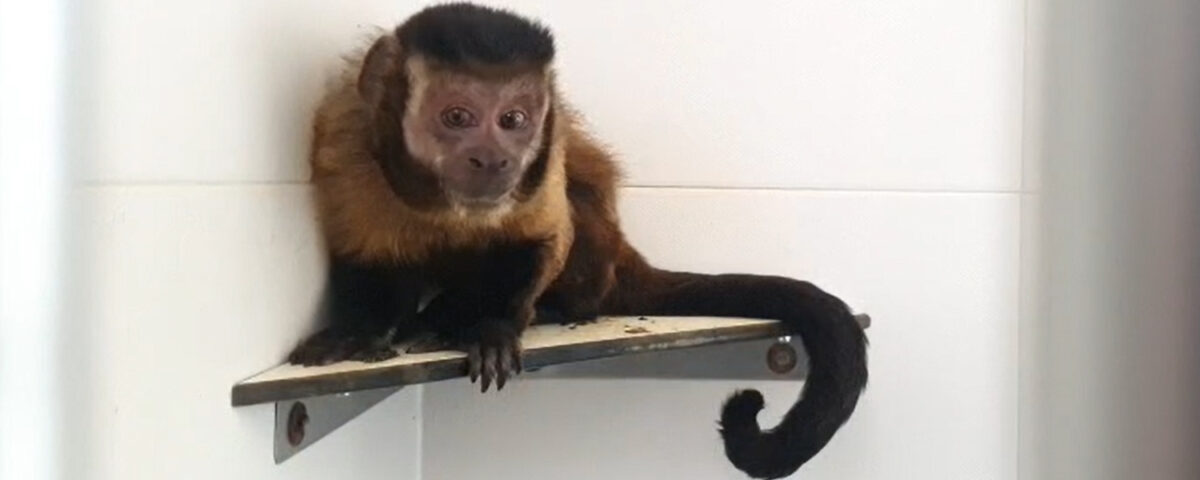
Black-capped capuchin monkey sitting on a shelf

Black-capped capuchin Capitán undergoes emergency surgery for lower body paralysis

Capitán arrived at AAP’s rescue centre in Spain at the end of July 2025. During his initial veterinary examination, we discovered that he suffers from metabolic bone disease. In the weeks that followed, his condition deteriorated, and Capitán lost the use of his legs—he became paralysed from the waist down.

Quarantine and early observations

Like all animals arriving at our AAP rescue centres, Capitán began a three-month quarantine period. During this time, his diet was adjusted, he received all necessary veterinary checks, and we started the treatment he needed.

At his first check-up, we observed that Capitán’s mobility was already limited due to his metabolic bone disease. His ulna and radius—the bones in his forearms—were deformed, and there were signs of a possible old fracture in his left forearm.

However, not long after this examination, his carers noticed that Capitán had stopped moving his legs entirely. He was dragging himself around, his movement was severely restricted, and he even stopped climbing.

The cause: a severe hernia

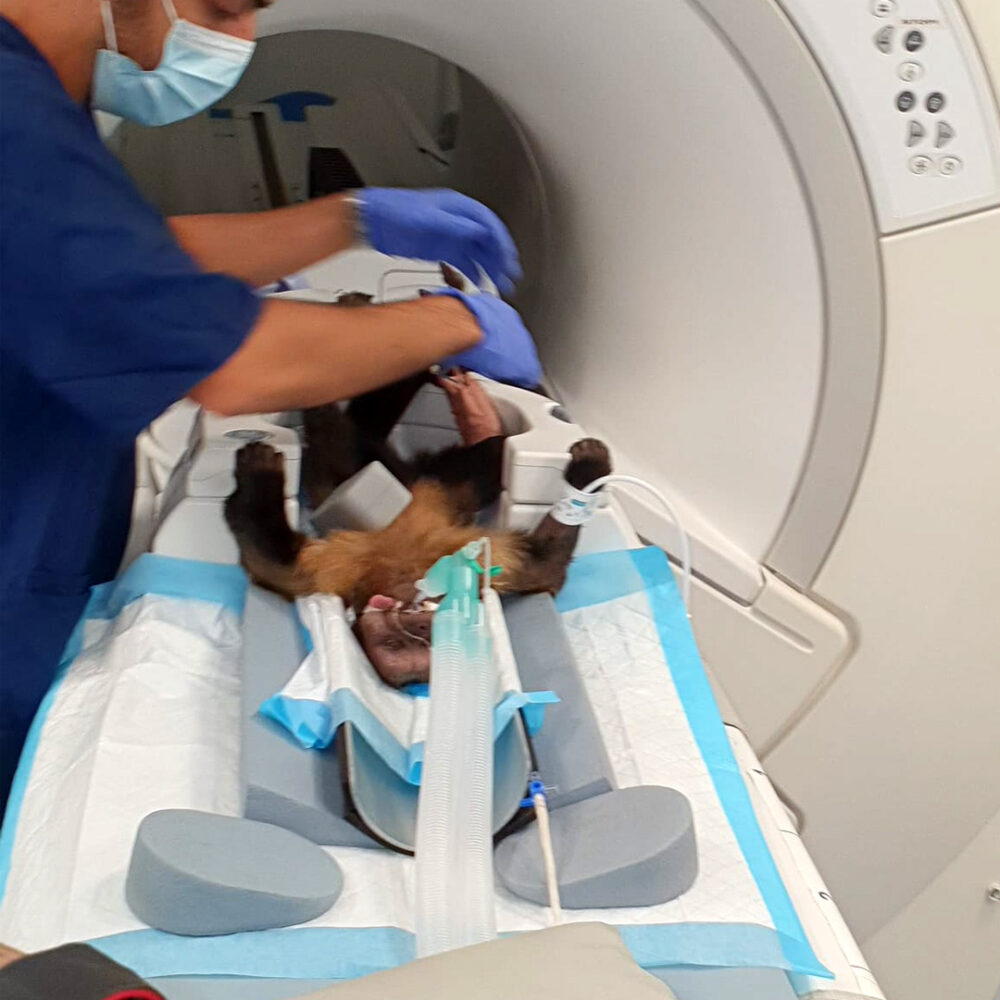
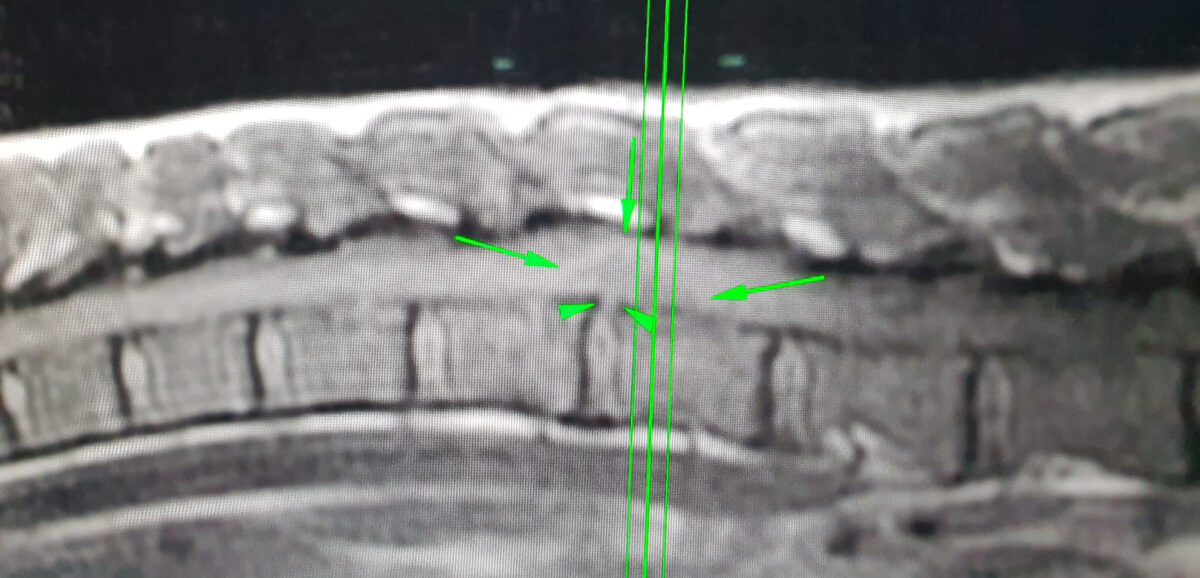
An urgent assessment was required. Capitán was taken to the Anicura Valencia Sur Veterinary Hospital, where an MRI scan revealed a herniated disc between his T14 and L1 vertebrae, causing severe spinal cord compression. This was clearly the source of his pain and immobility.

Black-capped capuchin Capitán enters the scan.
The herniated disc between his T14 and L1 vertebrae.
Emergency surgery
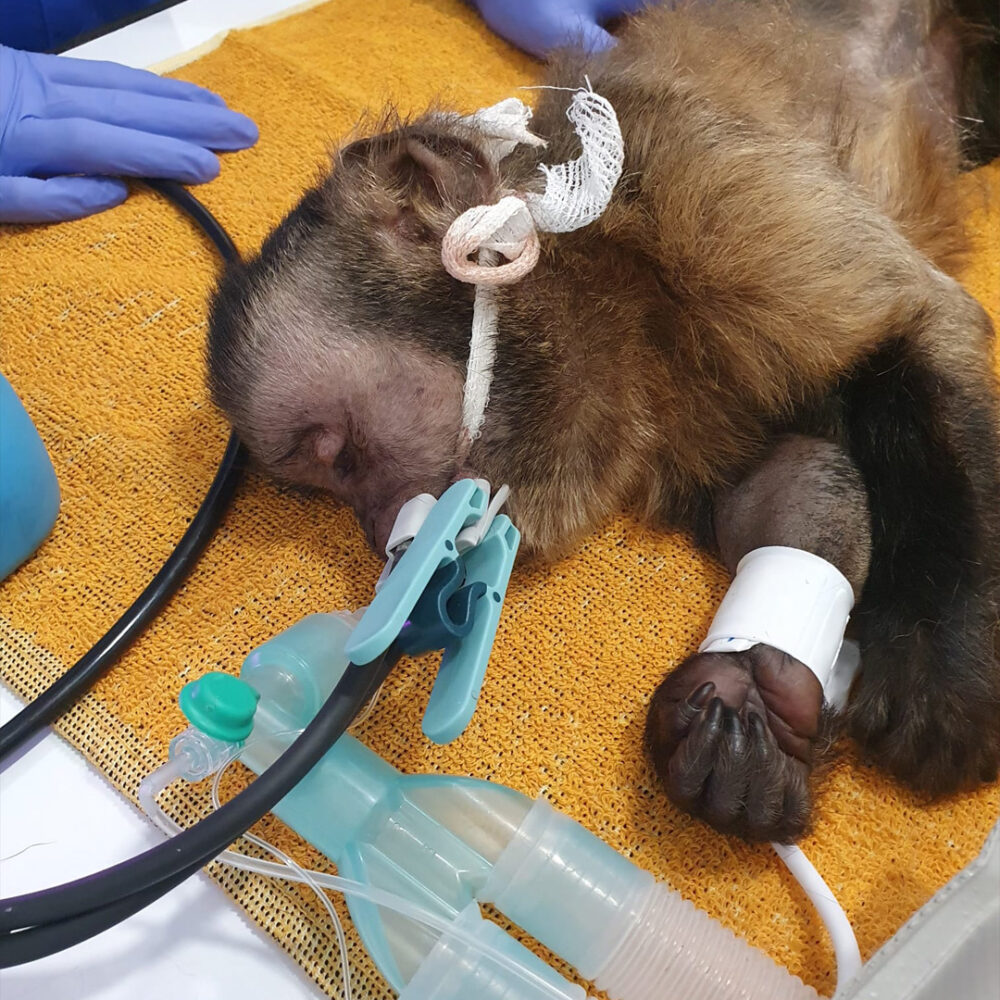
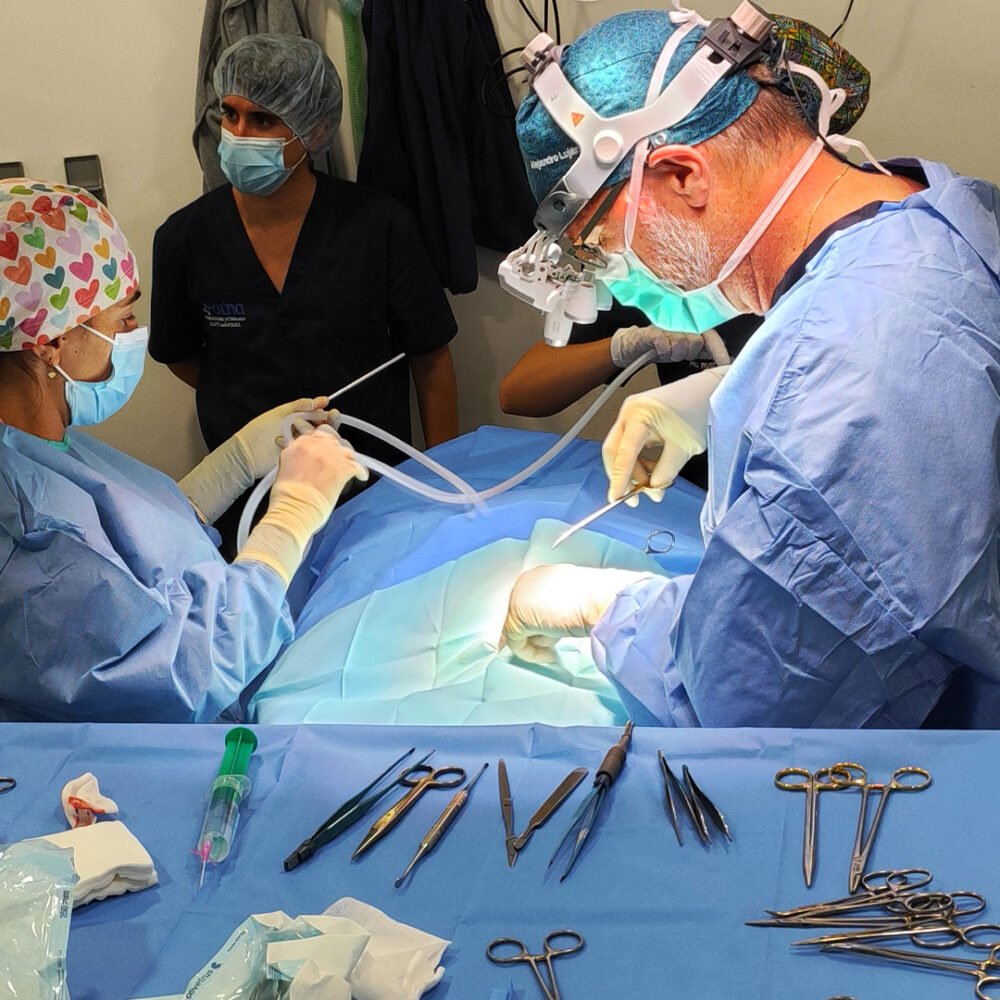
Hernia surgery in primates is a high-risk procedure. However, to give Capitán the best chance at regaining his mobility and quality of life, we had to act. He was transferred to the Aúna Veterinary Speciality Clinic in Valencia, where he underwent emergency surgery.
Black-capped capuchin on the operating table.
Doctors at work
Recovery and rehabilitation

The prognosis following surgery was cautiously optimistic. While there is a chance Capitán will walk again, full recovery could take six months to a year. We are also monitoring whether he will regain the ability to climb.

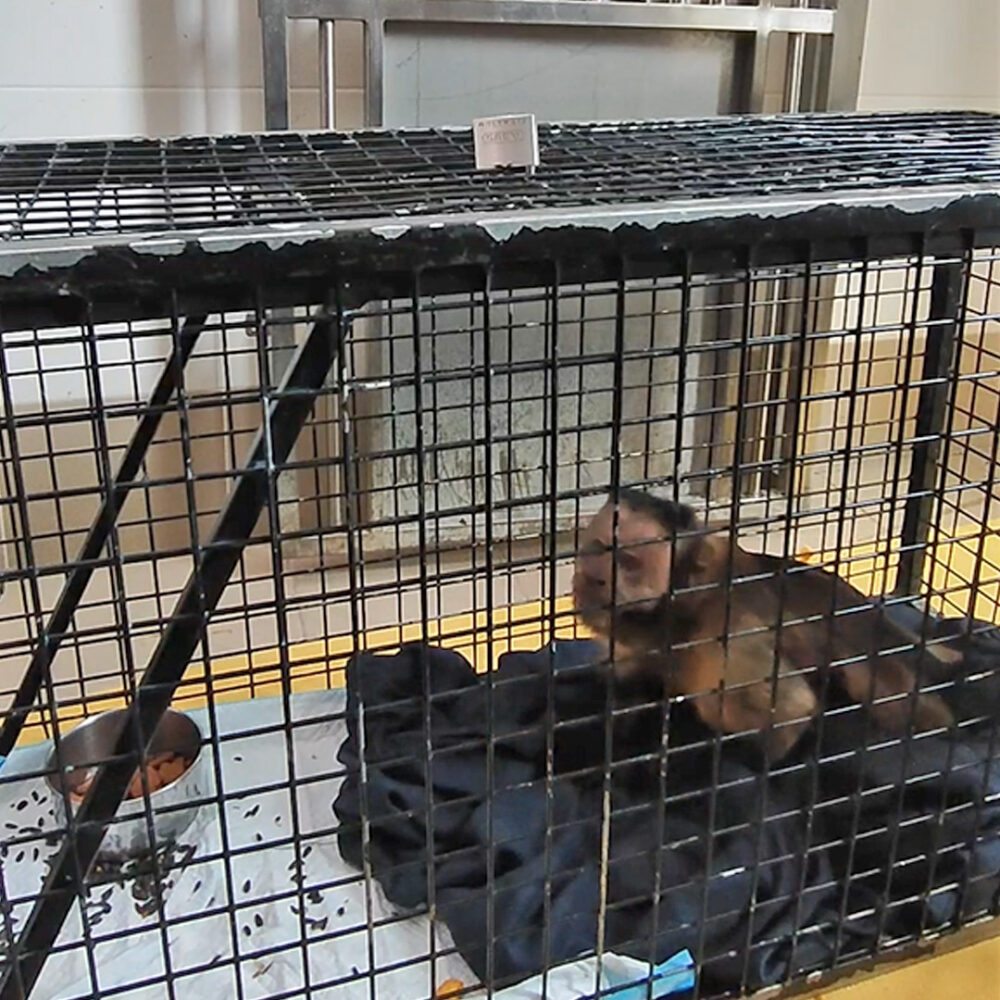
In the first few weeks post-surgery, Capitán’s movements remained very limited. He was kept in a small, controlled space to prevent overexertion.

As expected, there were no immediate signs of improvement. But in recent weeks, his carers and vets have observed small but encouraging changes: Capitán can now stand, move his tail slightly, and has begun to move his left leg. He has also gained some weight.

Black-capped capuchin Capitán in a small enclosure.
Capitán was kept in a small enclosure to limit his range of movement.
Watch: Capitán’s recovery journey
In this video, you can see how Capitán lost the use of his legs and the slow but hopeful recovery process following his surgery.
Ongoing monitoring
We continue to monitor Capitán’s condition closely. Helping him regain mobility in his lower body remains our top priority. His dedicated carers and veterinary team are doing everything they can to ensure Capitán has the life he deserves.

Other news