Barbary macaque sits on a pole holding a red toy

Rescued Barbary macaque youngster arrives at AAP

A very young Barbary macaque, no more than a year and a half old, has arrived at AAP’s rescue centre in Spain. Lu, as she has been named, was found wandering the streets of Jouy-en-Josas in France with a rope around her neck, a sign that she was probably kept illegally as a pet. It is likely that she escaped or was abandoned.

Wandering through the streets

Lu was seized by the French Biodiversity Agency (Office français pour la biodiversité) and initially taken to Lumigny Zoo while the necessary procedures for her transfer to AAP were completed.

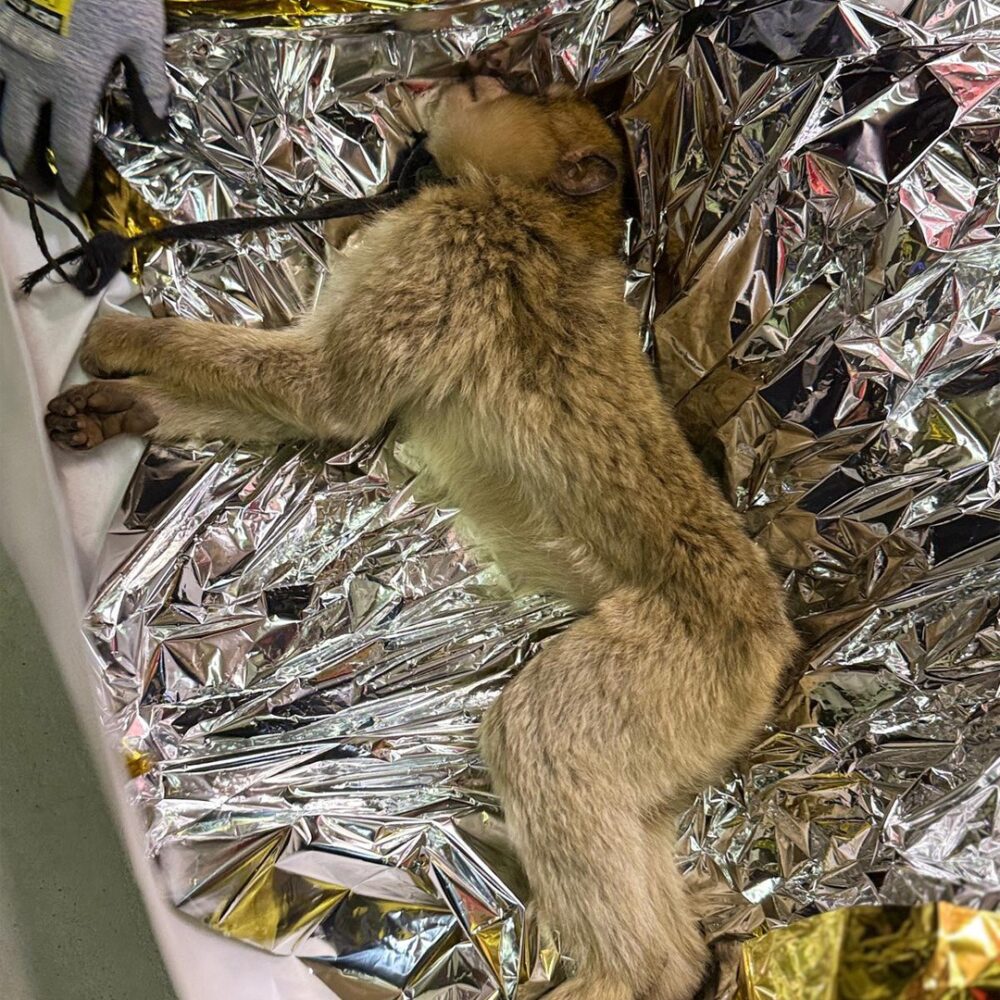
Barbary macaque laying on a heating foil and with a rope around her neck.
Barbary macaque Lu was found with a rope around her neck,
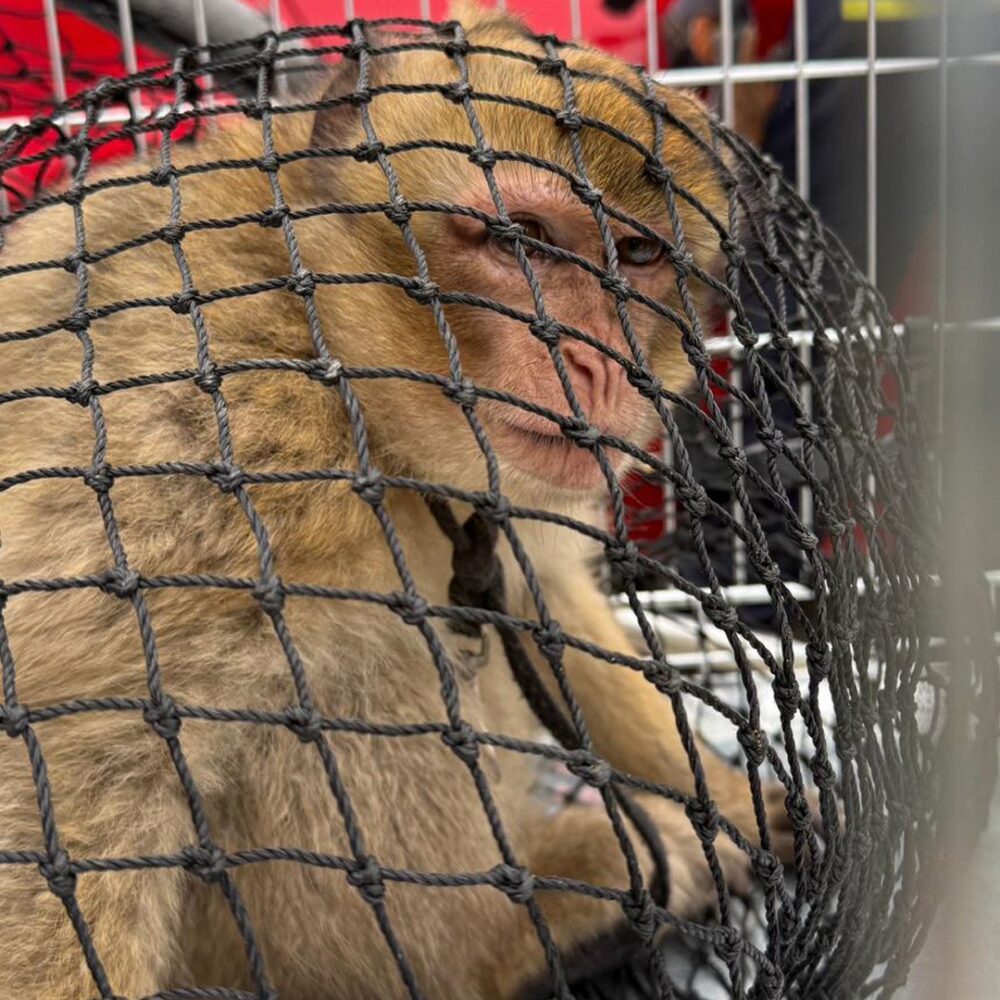
Barbary macaque caught in a net.
Lu was caught on the street.

Far away from her natural habitat

Barbary macaques are native to the Middle and High Atlas regions of Morocco and, to a lesser extent, Algeria. They live in groups of between 20 and 60 individuals and reach sexual maturity between 4 and 6 years of age. The species is endangered, and international commercial trade in wild caught Barbary macaques is not permitted under Appendix I of the CITES convention – although trade in captive bred species is allowed albeit with certain restrictions.
Positive Lists as solution
Lu’s situation reinforces the need for an EU-wide Positive List to outline which species can legally be kept as pets, to protect animal welfare but also people and the environment. France, where Lu was found, currently has a Positive List under development.

“It is encouraging that France has committed to implementing a Positive List of species that can be kept as pets. We urge the government to prioritize the development and implementation of this proactive regulatory tool, which will prevent thousands of animal species unsuitable as pets from suffering by living in an environment that is not appropriate for them.”

Although national regulation of the trade in wild animals is a very important step, the risks associated with this trade do not stop at national borders. The ultimate solution must be sought at EU level. At AAP, in addition to helping national governments with the development and implementation of Positive Lists we also advocate for a Europe-wide Positive List to ensure that animals are protected equally throughout the EU.
Lu in quarantine

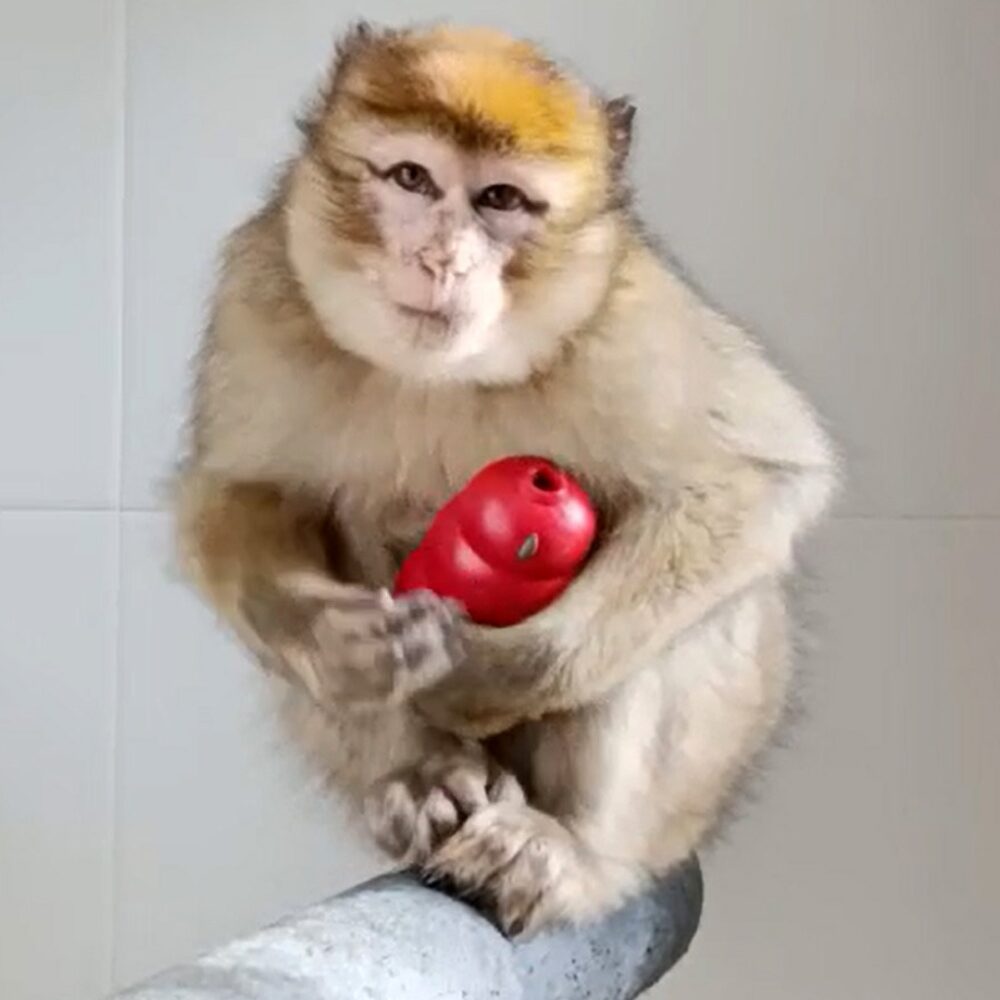
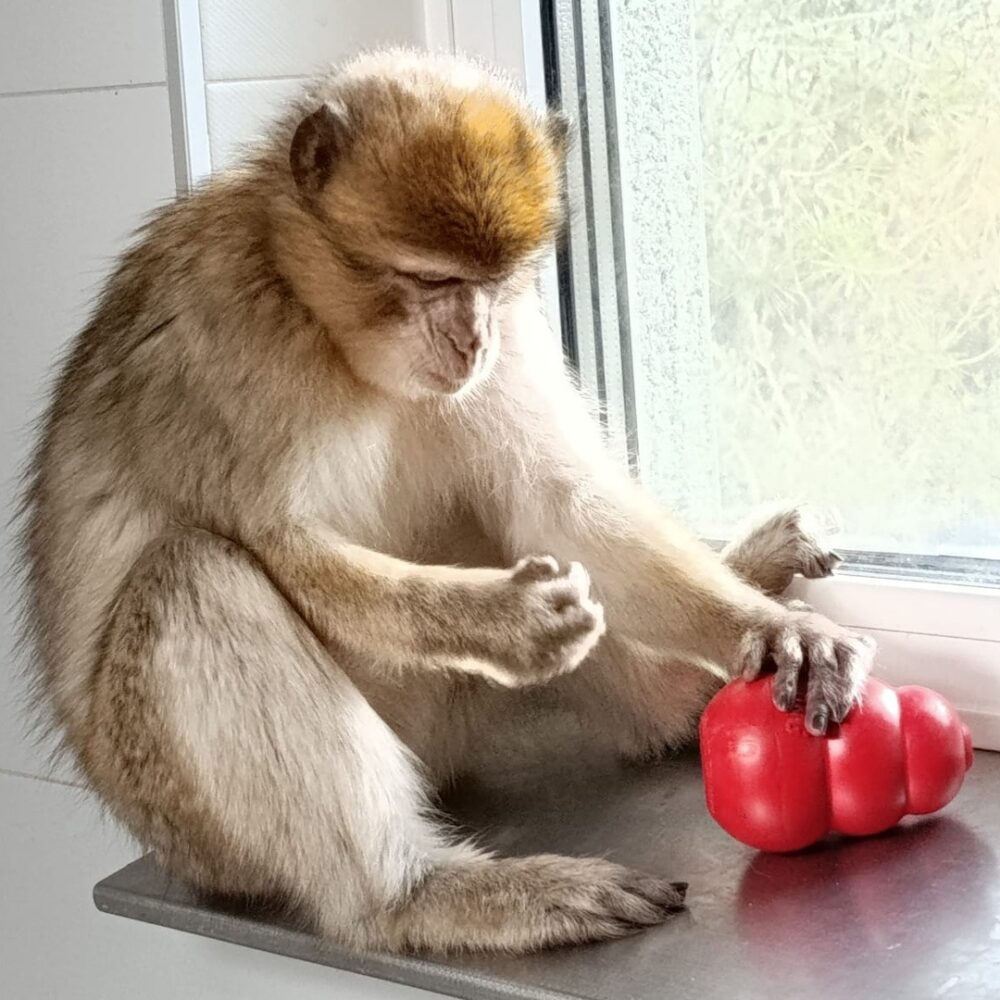
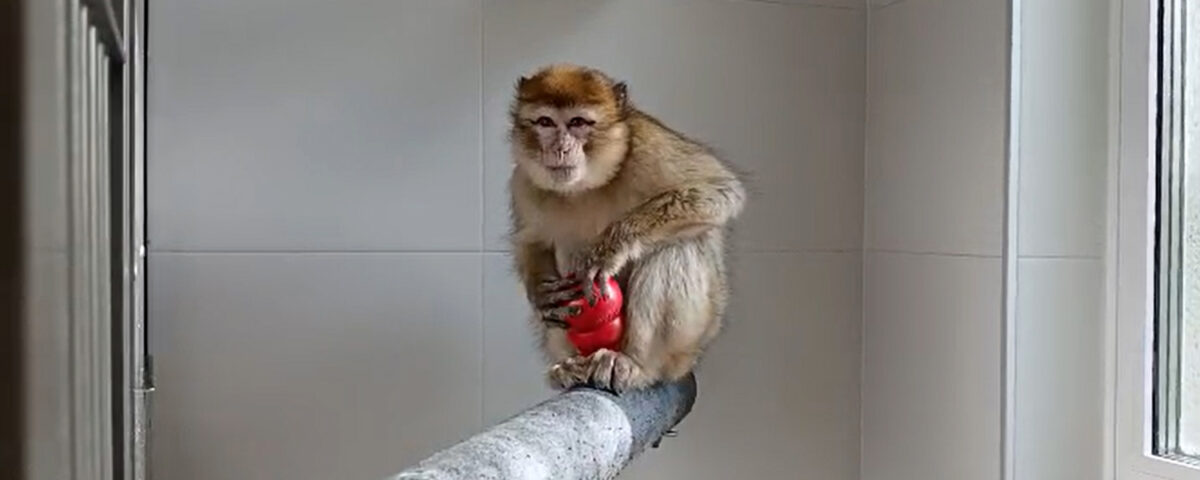
Having arrived at our rescue centre quite nervous, Lu is now doing well, pending the results of bacteriological and parasitological tests. She is currently in quarantine but has access to visual contact with other members of her species so that her social skills can be assessed.

Once the quarantine period ends, we will begin her social rehabilitation with other primates. This process is vitally important so that she can grow up learning natural Barbary macaque behavior.

Barbary macaque sitting on a pole holding a red toy
Barbary macaque Lu in quarantine.
Barbary macaque sitting in a window frame playing with a red toy.
We will introduce Lu to another Barbary macaque as soon as possible.

Other news