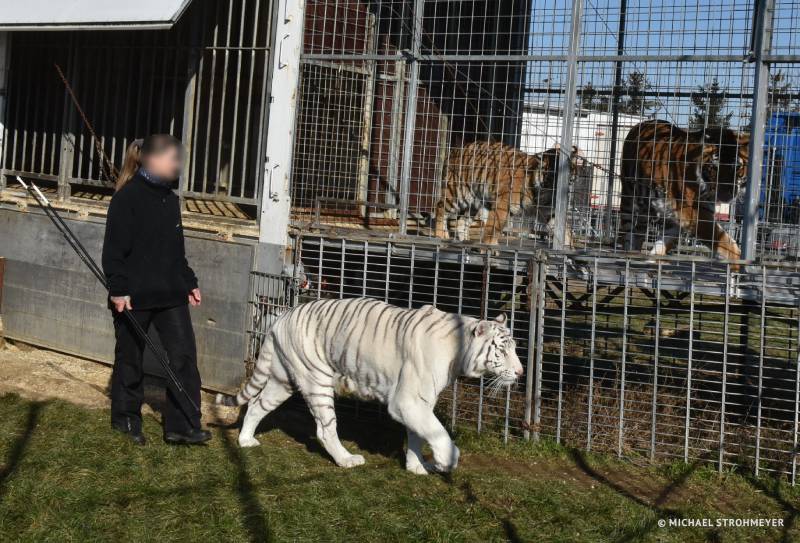
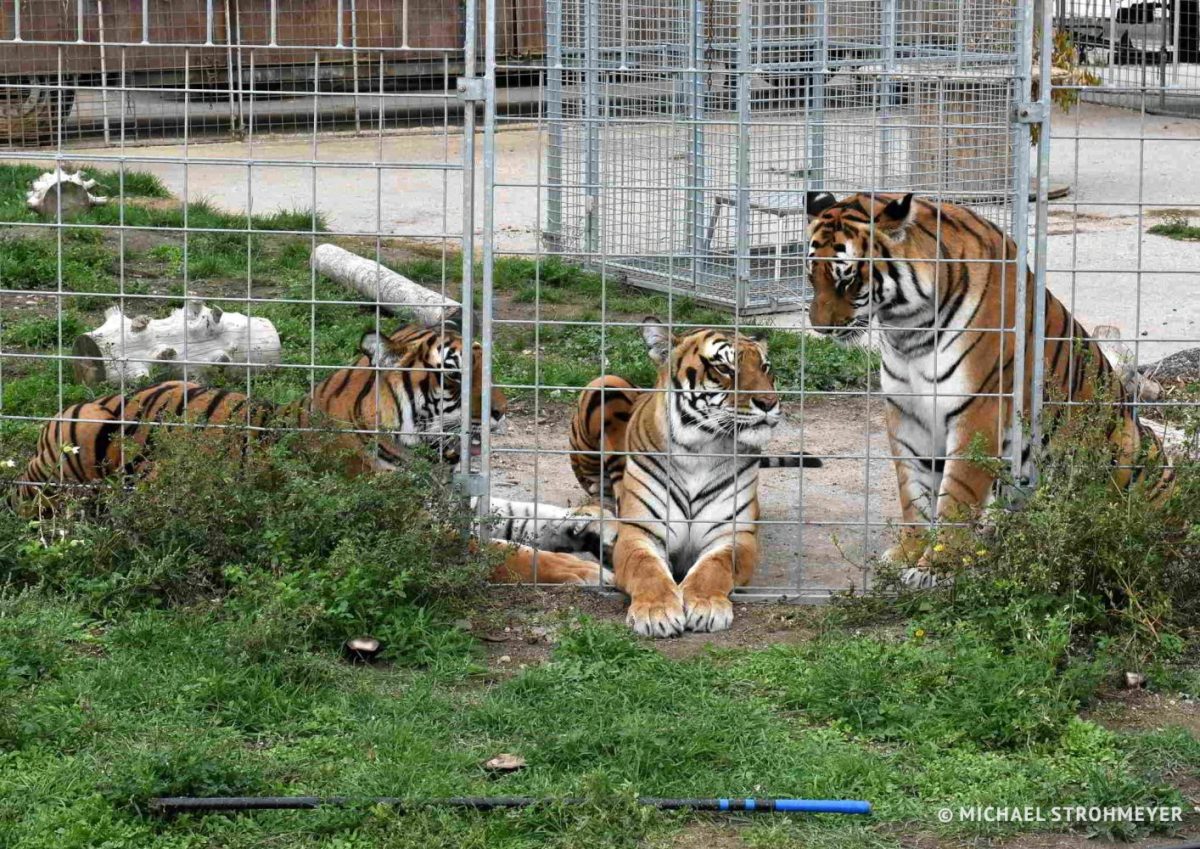
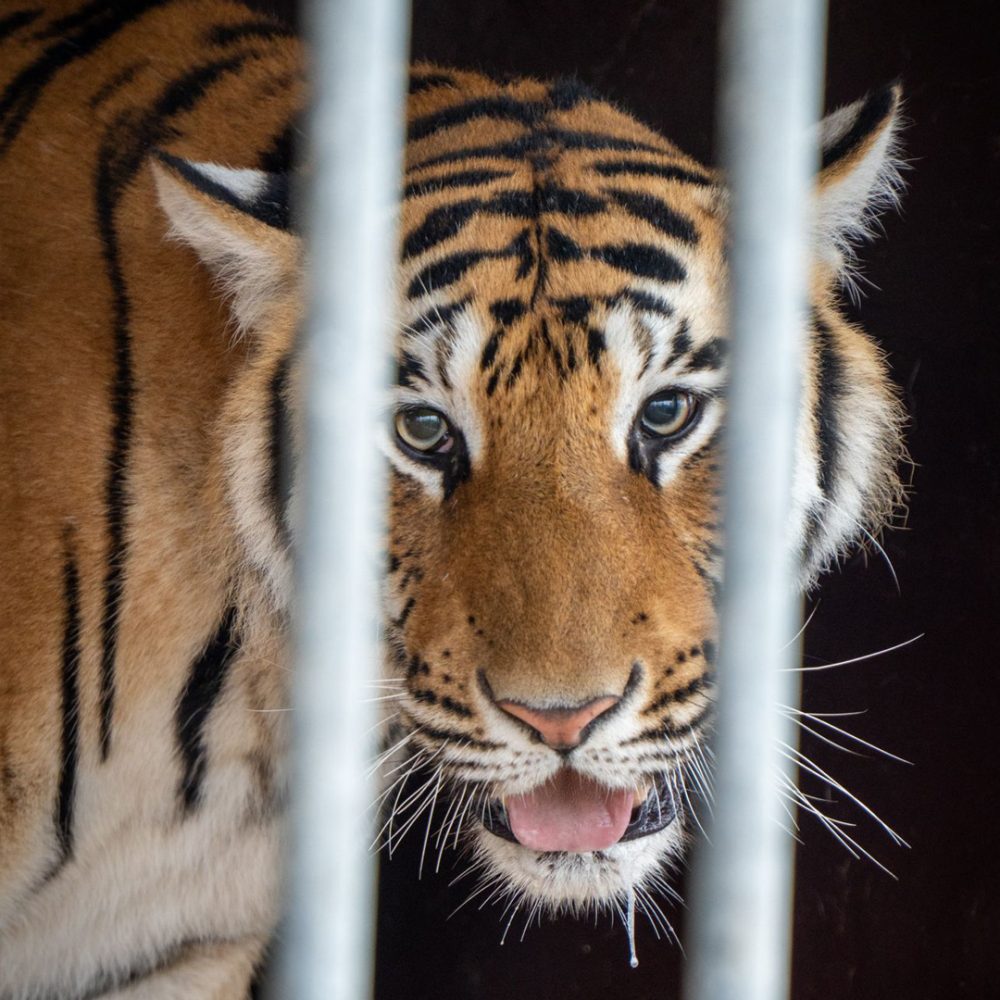
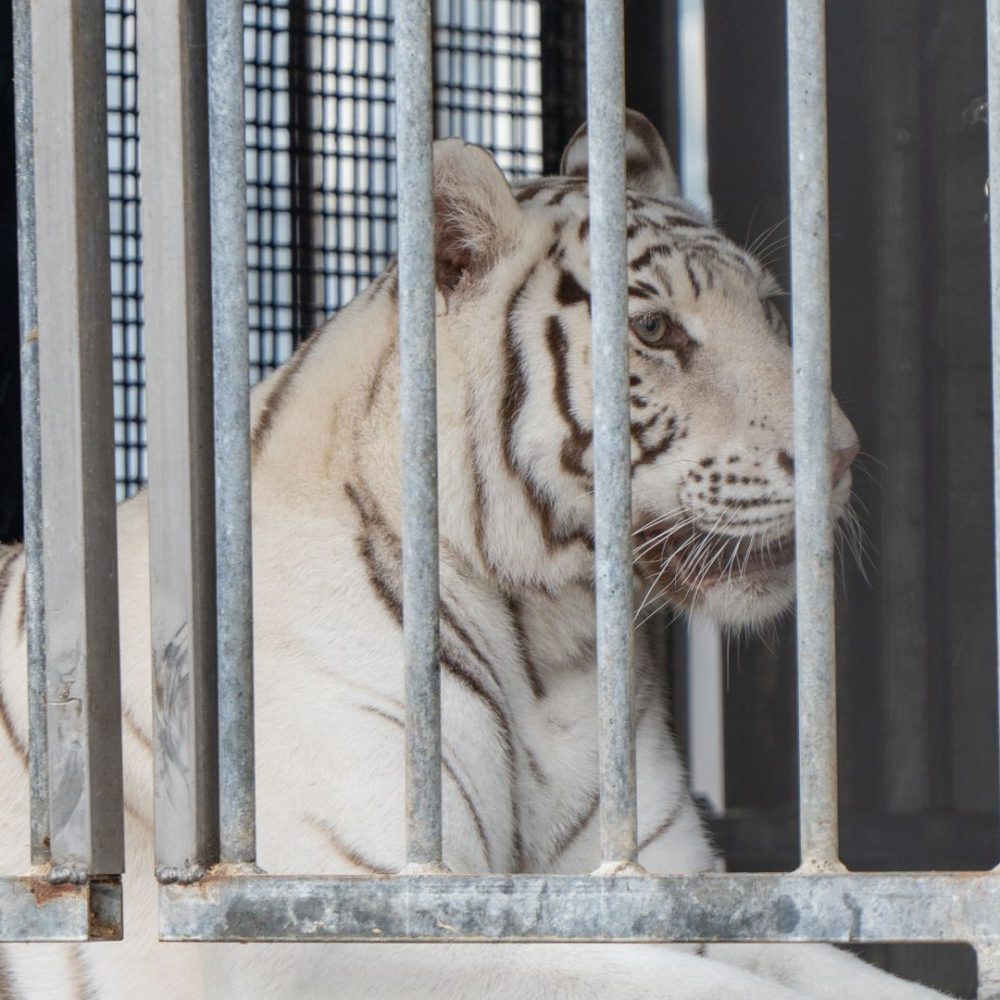
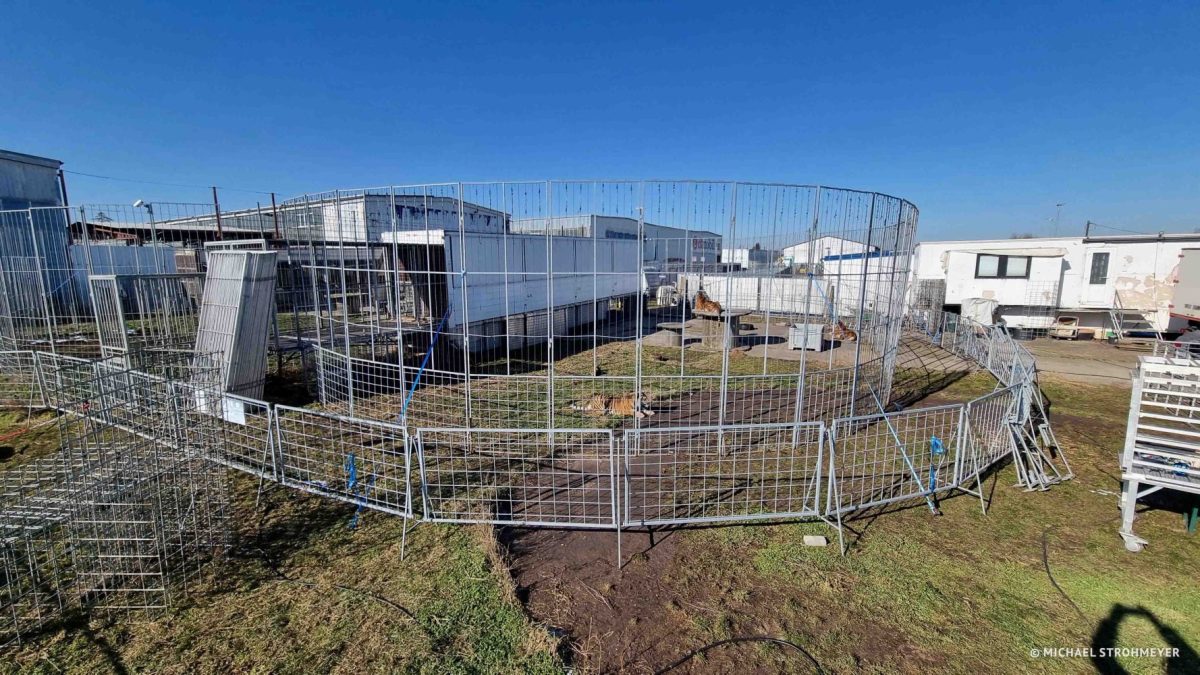

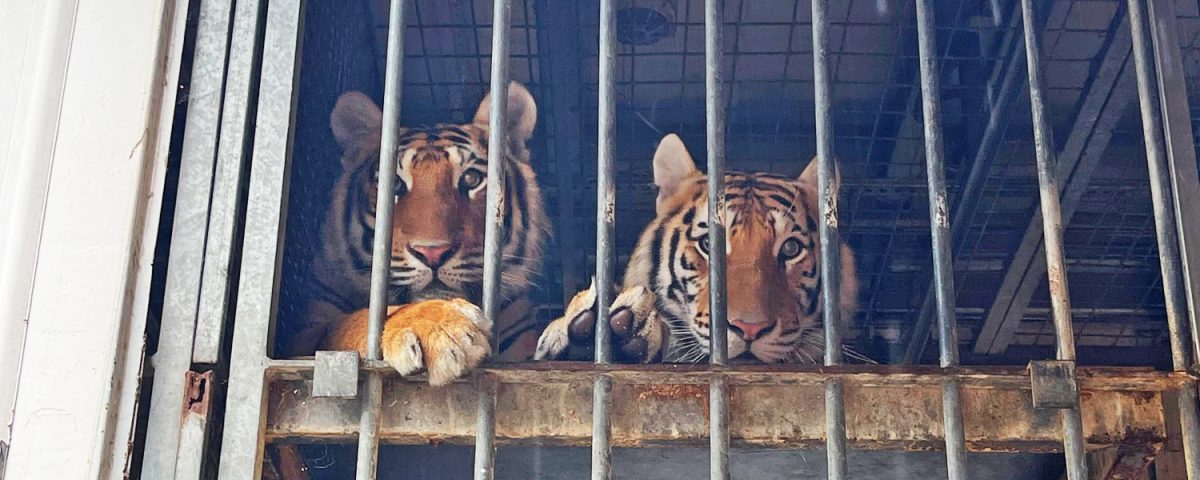

In late May, a male tiger escaped from a private facility in Northern Saxony, seriously injuring one of his keepers and forcing the police to shoot and kill the animal. Today, AAP (Animal Advocacy and Protection) is bringing six of the remaining tigers to safety at their Spanish rescue centre.
Mother Saphira and her five young are currently on their way to the AAP rescue centre in Spain. There, they will be able to recover from their time in private ownership, and live for the first time as the wild animals they are, not the pets or entertainers they were raised to be. AAP would like to thank the relevant authorities for their close cooperation during the rescue.
Breach of the law
The five young tigers – Goliath, Zimba, Davina, Radscha and Bombay – were seized by the relevant veterinary authority following a breach of the German Animal Protection Act. According to the authorities, the conditions at the facility do not meet legal requirements for animal welfare. Furthermore, the owner lacked the documentation proving the legal origin of the mother, Saphira. Both of these breaches were grounds for the animals to be removed.
A new life in better conditions
The six tigers underwent a first veterinary examination whilst under sedation during their rescue. “No declawing has been observed,” the veterinarians shared. “The animals are in good condition and fit for the journey. At AAP Spain, we will carry out more medical tests to rule out any possible complications.”
Once they have completed the necessary quarantine period, the six tigers will live in an outdoor enclosure measuring 3,000 m². This is significantly larger than the minimum enclosure size required by German regulations, which is just 100 m² per animal. The enclosure features natural vegetation, including trees, shrubs and logs, as well as a pool for bathing, hiding places, platforms and other structures.
Two tigers still remaining
For the time being, two tigers will have to remain on the premises in Germany. The authorities are examining their situation to evaluate whether they can also be confiscated. AAP has offered to take in these two animals as well.
Prevention rather than emergency measures
In Germany, there is no national legislation governing the private keeping of wild animals, making it legal to keep tigers as pets in several States. This case highlights the structural problem this creates for wild animals, who can end up living in inappropriate conditions in private care.
“The lack of robust, uniform and legally binding regulations on wild animal ownership makes it extremely difficult to prevent people from keeping animals like these in private homes and facilities. The risk of tragic incidents like the one we saw in Saxony recently is just too high – both to the animals, and to local communities. This is why we need authorities in Germany and the EU to take a proactive approach and only allow private ownership when it’s safe for animals, people and the environment.”
Devrol Dupigny, Head of Public Policy at AAP
Appropriate pets
AAP advocates for ‘Positive Lists’ of animal species, drawn up according to scientific criteria, which aims to set out which species can be kept safely and appropriately as pets. Species not included on such a list are excluded from being kept as pets. This model is already enshrined in legislation in eight European Union countries, such as in Belgium and The Netherlands, and its introduction at EU level is currently under consideration.