Injured serval cub Ravi brought to AAP

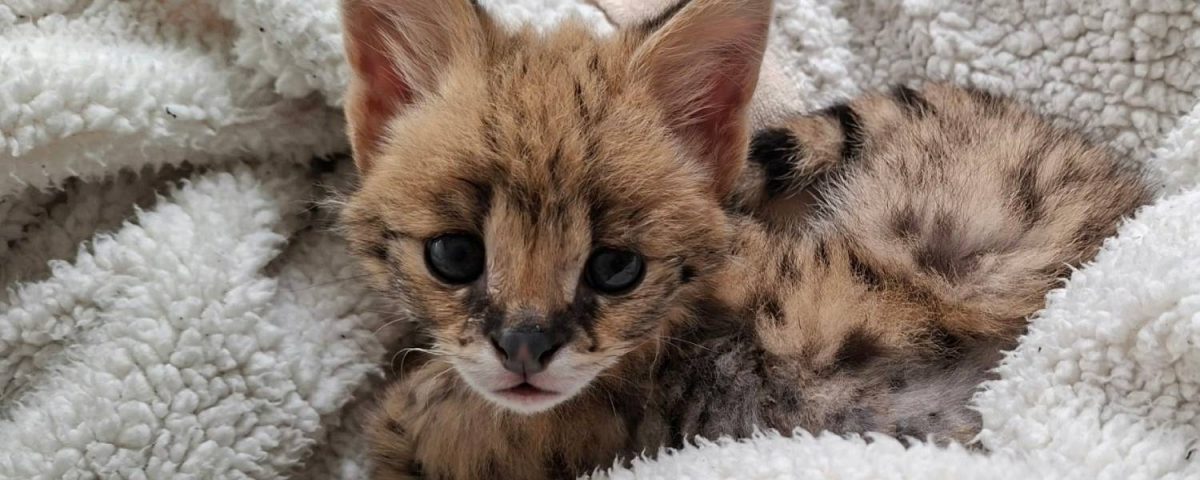
Serval cub Ravi was just three weeks old when he was abandoned in a cardboard box in a field near Zaandam in the Netherlands. The young animal had a large, infected wound on his back, and his chances of survival seemed slim.

Thanks to the efforts of Dierenzorg Zaanstreek, a non-profit animal welfare organisation, Ravi received the intensive care he needed. Now that he has regained enough strength, he has been moved to AAP’s rescue centre in Almere.

Abandoned with an inflamed wound

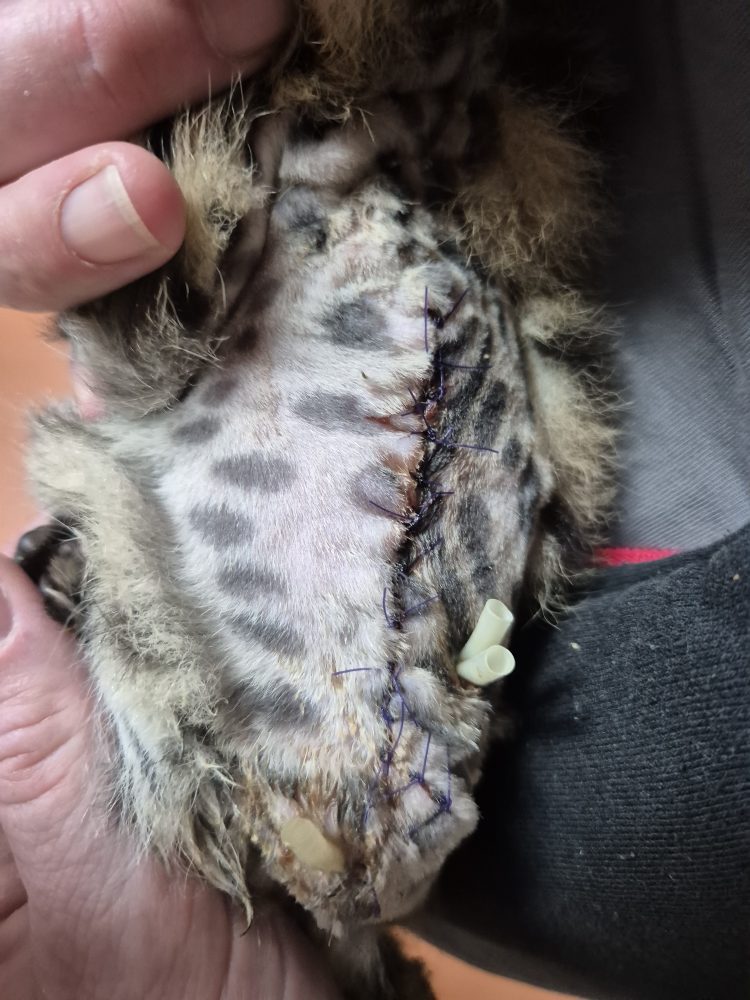
At the end of August, Dierenzorg Zaanstreek received a call about a kitten that had been abandoned in a field. It was only when staff opened the cardboard box that they realised it was not an ordinary domestic cat, but a young serval – and he had a severe, infected wound on his back.

He was taken straight to the veterinarian, where his wound was cleaned and stitched up. However, given his young age, it was clear he needed extra care.


The back of a young serval, stitched up and with drains.
The stitched wound on Ravi’s back.

“You definitely notice this is not a pet”

The extreme circumstances of Ravi’s case meant that at-home care was necessary for him to heal, but caretaker Lisanne of Dierenzorg Zaanstreek quickly saw that a private home was not the right place for him.

“Everyone says, ‘Aww, how cute,’” she says. “But actually, I experienced it as anything but cute. I truly had a wild predator living in my home. You definitely notice that this is not a pet.”

Servals are wild predators that require a great deal of space and have specific behavioural and care requirements. Despite their striking appearance, they are not domesticated. They can jump high, and they have sharp claws and teeth; they therefore pose a risk to both humans and other animals. Moreover, they can easily escape, which we often see in the news.

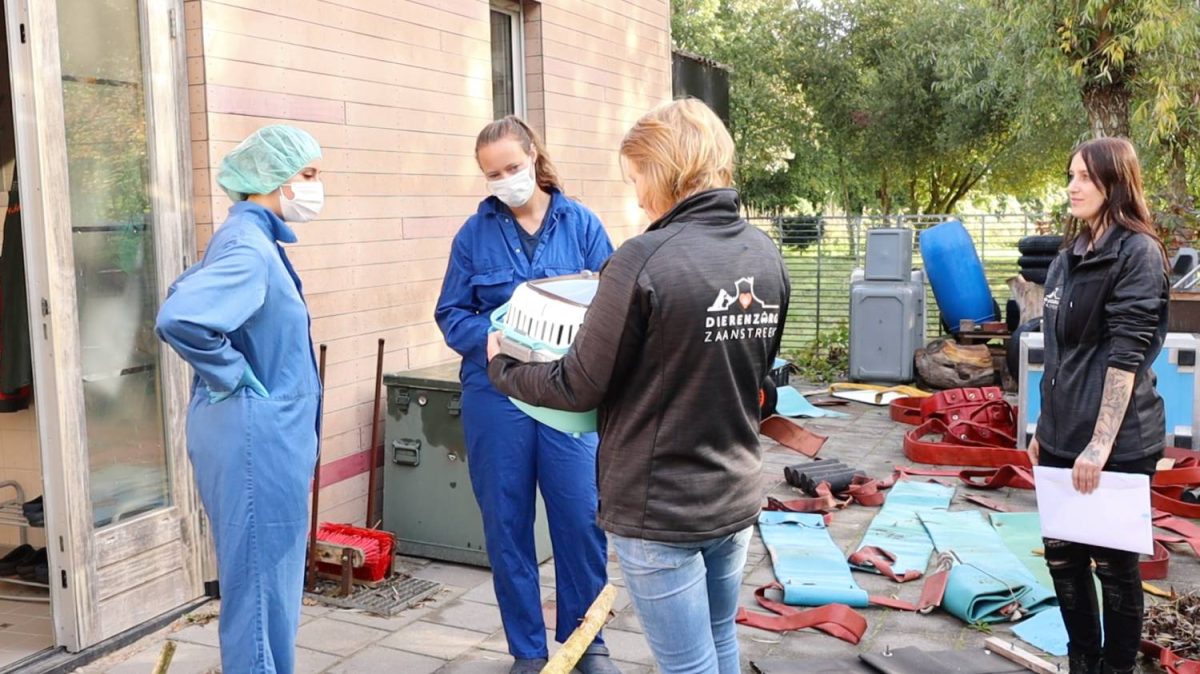
Four people stand in front of a building, holding a transport kennel. Two of the persons are dressed in protective clothing,
Serval Ravi is being taken to the AAP quarantine facility by staff from Dierenzorg Zaanstreek.
From emergency shelter to a safe future

Since the introduction of the list of domestic and hobby animals for mammals on 1 July 2024, servals may no longer be purchased, bred or sold in the Netherlands. Only people who already owned a serval before that date are permitted to continue keeping the animal, subject to certain conditions.

AAP supported Lisanne with advice on the specialised diet and care that a serval of this age requires, and thanks to her dedication Ravi’s wound has now healed and he is doing much better.

Now that Ravi is strong enough, he can take his next step at AAP’s rescue centre. Here, he is receiving the space, care and specialist support suited to a wild animal such as a serval.

Ravi’s story once again highlights the consequences of keeping wild animals as pets, and the importance of offering them a safe future in an environment that fits their needs.

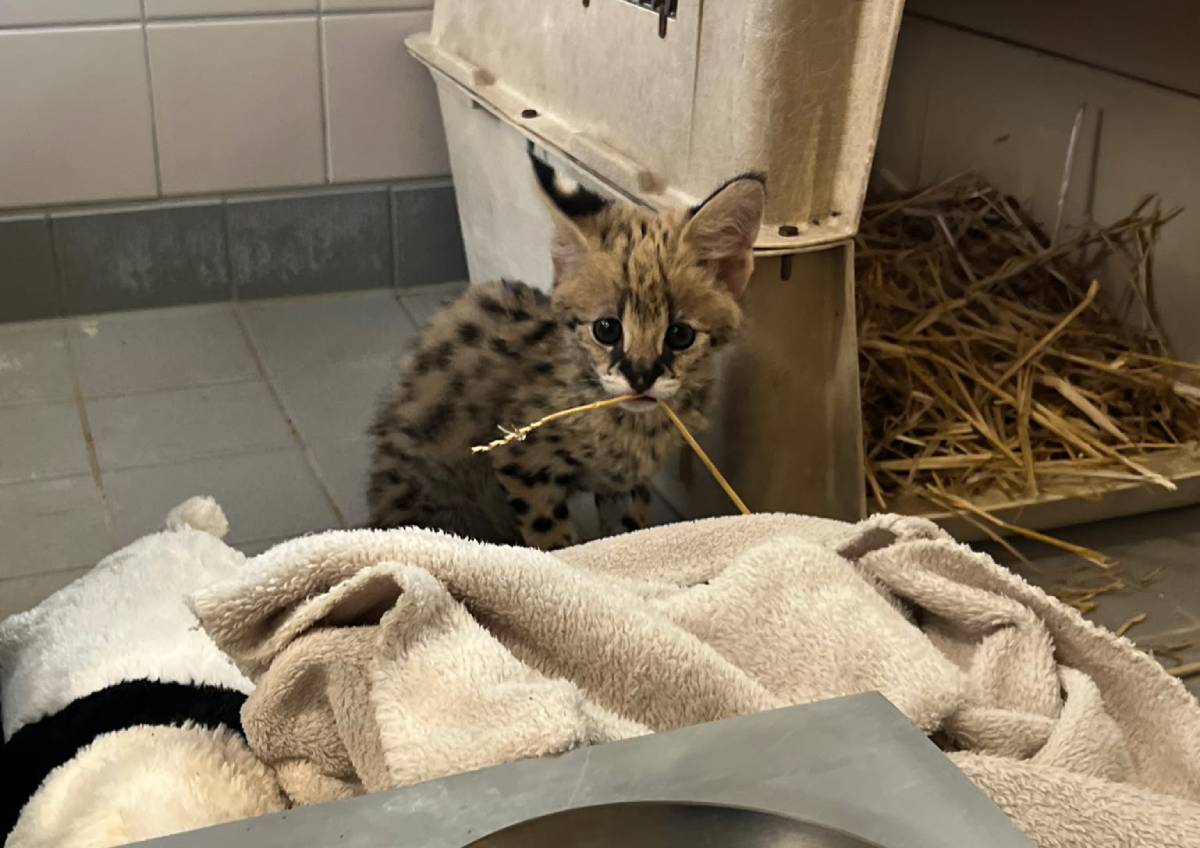
A young serval sitting in front of a kennel.
Serval Ravi is in quarantine at AAP. Here, we can continue to work on his recovery.

Other news