

What is enrichment? Play and a touch of the wild in enclosures
What does ‘enrichment’ actually mean?
In animal care, the word ‘enrichment’ literally means making a living environment ‘richer’. It refers to items, toys, and a change of the enclosure that offer animals new stimuli and challenges.
We’re often asked whether the animals at AAP get bored, and that’s exactly what enrichment is designed to prevent. For example, our animal carers often:
- Hide food so animals must go searching for it
- Build climbing frames
- Hang new objects in the enclosures for the animals to discover, such as branches or objects.
All these changes give the animals a reason to re-explore their enclosures and actively engage with their surroundings.
Why is enrichment so important?
Enrichment plays an essential role in our work at AAP because many animals arrive at our rescue centres after being removed from difficult, traumatic situations. Some of them have lived alone in a cage for years and do not know how to behave socially; some are even accustomed to boredom. Enrichment helps us manage their stress during the transition and improve their wellbeing in a few important ways.
Preventing and managing behavioural disorders
In the wild, animals receive constant stimulation that helps them to stay healthy and explore their natural instincts.
By contrast, if animals in captivity have nothing to do for long periods, they often develop so-called ‘stereotypies’: behavioural disorders such as aimless movements that they repeat over and over due to a chronic lack of stimulation. One example is constantly walking the same route within the enclosure. In the worst cases, such abnormalities can even lead to self-harming behaviour.
Enrichment plays a key role in preventing and managing these stereotypies. It directs the animals’ attention towards new tasks and stimuli and encourages natural behaviours such as foraging, exploring or climbing.
Reducing stress during and after rescue
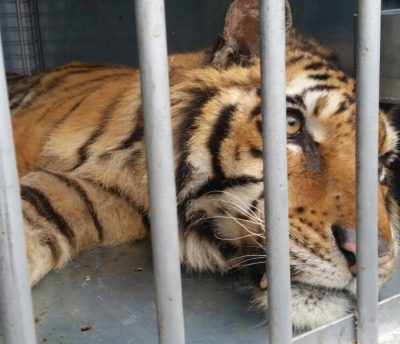
The change in surroundings that occurs during a rescue can be stressful for animals, even when their new environment is ultimately a better fit for them. Enrichment helps ensure a smoother transition.“A varied environment is one of the most important factors in reducing stress. It provides distraction whilst simultaneously encouraging natural behaviour, such as foraging for food independently.”
Olga Bellón, primate team leader at AAP in Spain
Enrichment is therefore an integral part of the rehabilitation programme at AAP from the very beginning – even during the quarantine period before animals are gradually introduced to conspecifics (other members of their own species).
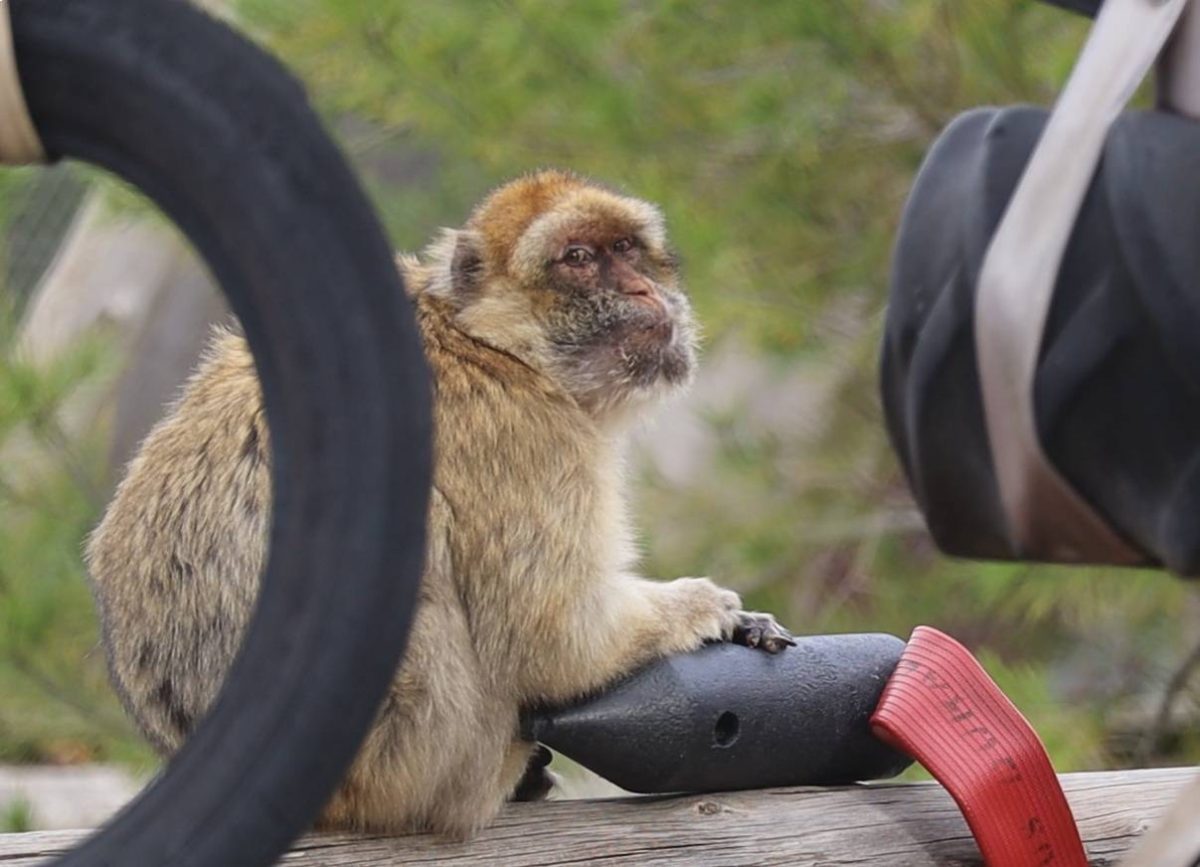
The effect is particularly clear in primates. After their rescue, they often need a long period of adjustment. Enrichment items such as drums, bottles, balls and toys made from old fire hoses provide distraction and stimulation during this phase and help the animals to settle down.
Every species is different
No two enrichment activities at AAP are the same. Instead, enrichment is tailored entirely to the individual needs of the animals.
Each species, and sometimes even each individual animal, requires its own approach. An enclosure for big cats requires different stimuli to one built for a group of primates; an older animal that has difficulty moving benefits from different activities to an energetic young animal.
For example, we mainly use scents, branches and cardboard boxes for tiger enrichment, whilst Barbary macaques are particularly fond of feeding puzzles. Smaller animals such as rodents often receive ‘chew material’: things they can gnaw on to sharpen their teeth. We also use small mirrors in the enclosures of smaller mammals, in which the animals can see themselves and keep themselves occupied.
It’s important to never use the same enrichment materials twice in a row, as this reduces their positive effect. That’s why we’re always coming up with new ideas: in summer, the animals are given frozen fruit, ice cubes and water hoses to beat the heat. In winter, there are extra blankets and straw for the animals to hide under.
Animal enrichment is an integral part of our daily work
At AAP, enrichment is not merely a treat, but an important part of the routine for the animals in our care, and we draw on expertise from across disciplines to make this happen, including animal carers, vets and behavioural biologists.
This ongoing work forms part of what the animals need to recover from their difficult experiences and enables them to lead a life free from boredom while they are with us.
“We want to encourage the animals’ natural, species-specific behaviour as much as possible. We achieve this through, amongst other things, suitable enclosures, varied enrichment and bringing them together with conspecifics, so that the animals can learn from one another.”
Kelly Lavooij van Leeuwen, a behavioural biologist at AAP