Project for the survival of the endangered Barbary macaque
Step by step, back to nature
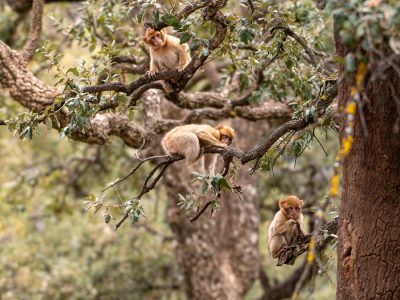
Since 2017, AAP has been working in two national parks in Morocco to save the endangered Barbary macaque. Through close collaboration with the Moroccan government and other partners, the Born to be Wild project aims to bring an end to the poaching and illegal trade of Barbary macaque infants and reintroduce Barbary macaques to their natural habitat.
For more than two years, we worked intensively on the socialization and preparation of the first 35 animals rescued in Morocco. A major milestone was reached in the autumn of 2025, when we released the first group of these Barbary macaques into their natural habitat.
A few months later, in the spring of 2026, the remaining Barbary macaques followed, meaning that all of the initial animals rescued in Morocco have now been released back into the wild!
First release Autumn 2025
The first group of Barbary macaques, Ayoub’s group, is released into the wild as food becomes more abundant in the forests in autumn.
Second release Spring 2026
After a very harsh winter, the Meknes group is released into the Tazekka forests in spring, ready to discover their surroundings.
Where it began: The fight against the extinction of the Barbary macaque
In 2013, several studies confirmed the worst: the Barbary macaque was on the brink of extinction. Fewer than 7,500 of this emblematic North African primate species remained in the wild across Morocco and Algeria. Infant macaques were frequently being stolen from nature by poachers and illegally traded, ending up as pets or tourist attractions. Additionally, their natural habitat was rapidly being destroyed. It was time to act.
In 2017, Barbary macaques were given the highest level of CITES protection during CoP16. Since then, the Moroccan government, with the support of AAP Animal Advocacy and Protection and other partners, has worked hard to curb the illegal trade of Barbary macaques in Morocco.
The first phase of Born to be Wild focused on Ifrane National Park. Park rangers monitored the recovery of wild macaque populations by preventing poaching and mitigating crop conflicts and forest fires. They also educated local communities about the importance of protecting the species. These initiatives continue today!
Since the start of the project, dozens of macaques have been confiscated and wild populations are slowly improving. However, the work does not end there. Confiscated animals need a future, and what better future than a return to the wild?
Video: It al starts here
In May 2022, Barbary macaques selected for the project arrived at the rehabilitation centre in Tazekka National Park, after being temporarily housed in Moroccan zoos.
Back to the wild in Tazekka National Park
In 2022, a second project under the Born to be Wild umbrella was launched in Tazekka National Park, in the Middle Atlas Mountains of Morocco. Barbary macaques previously lived freely in these forests but disappeared due to human activity.
Now, conditions have changed: the area is suitable again, meeting the species’ ecological needs and offering full protection. For this reason, the project aims to restore the presence of Barbary macaques in this park, a reintroduction project unique in AAP’s history.
In 2025, the project reached a major milestone: the first group of macaques was returned to the wild after a long and intensive preparation process, as all individuals were confiscated animals.
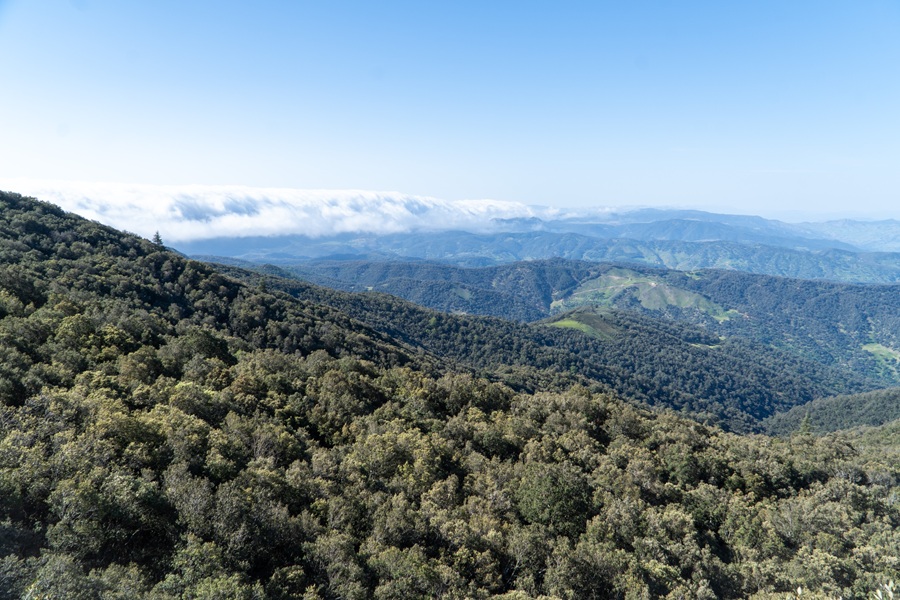
Tazekka National Park in Morocco.
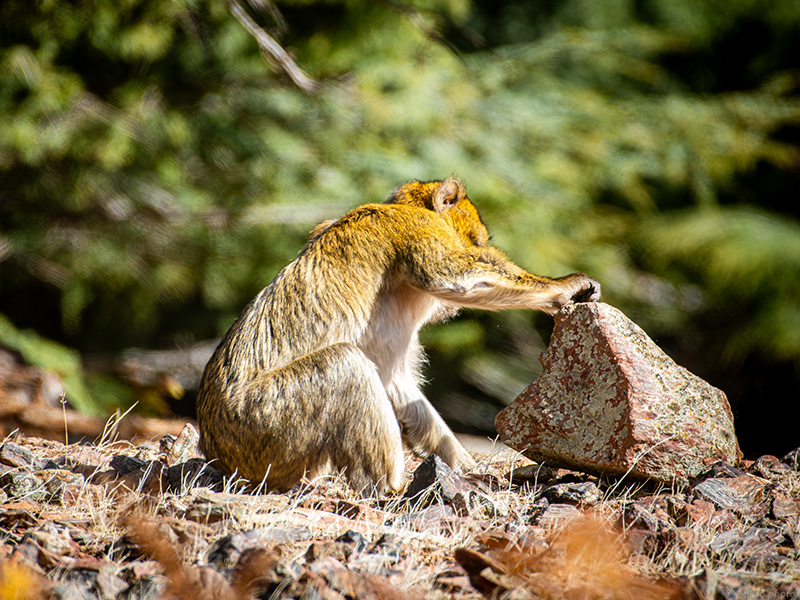
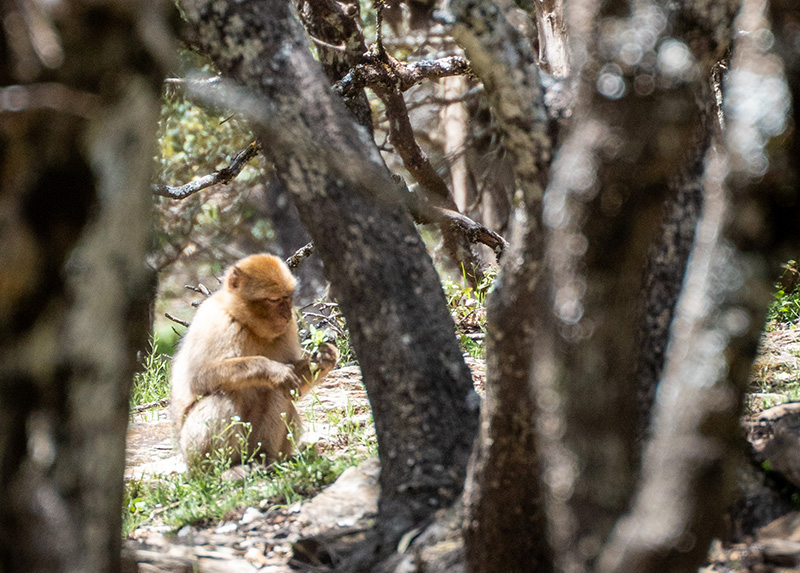
Omar, one of the released Barbary macaques, looks for food by turning over a stone.
First years: socialisation and learning
During the first year, rescued macaques were re-socialised in progressively larger groups, eventually forming two stable groups. In the following year, these groups lived in larger enclosed pre-release facilities, where they learned essential survival skills, including:
displaying natural behaviours
recognising predators such as birds of prey, dogs, wolves and snakes
cooperating socially
foraging independently
reducing their focus on humans
Gradually, the groups have become more cohesive and are now stable enough to survive together in the wild. During this time, new infants were born, strengthening group cohesion and ensuring future generations in Tazekka National Park.
Finally free!
The 35 Barbary macaques that initially arrived at the Tazekka rehabilitation center after being rescued from illegal trafficking and poaching have been released in two groups.
The first group, nicknamed “Ayub’s group” after the dominant male, was moved to a remote location within Tazekka National Park in the autumn of 2025, coinciding with the increased food availability in the park during that season. There, they spent a few days acclimating to their new surroundings in a temporary enclosure. Afterward, the gates were opened, and they were able to find their own space in the wild within this beautiful area.
Find out more about the release of Ayub’s group, the first group of Barbary macaques to be returned to the wild.
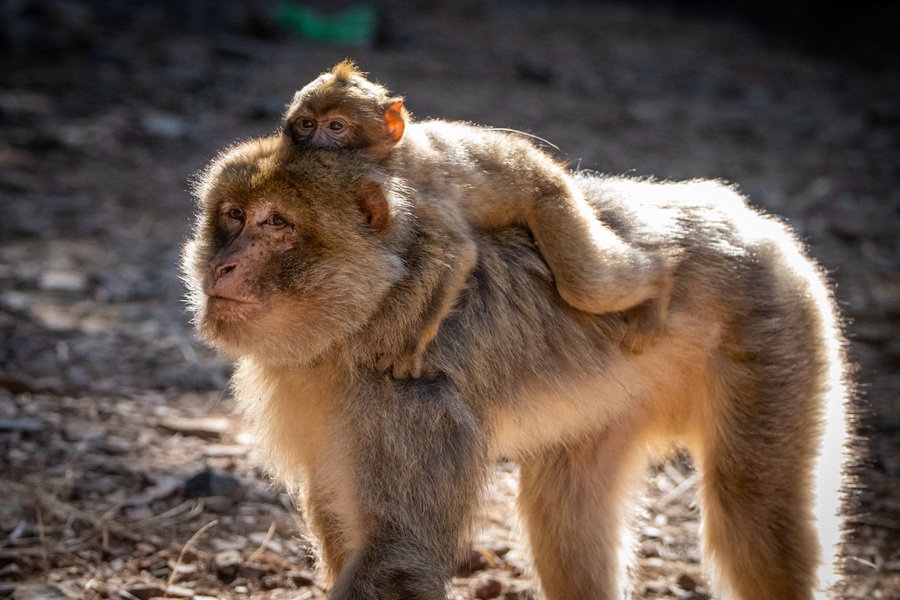
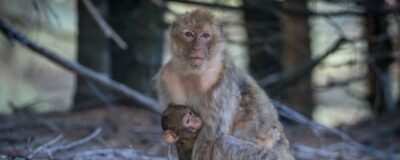
One of the adult Barbary macaques from the first group with a baby on its back,
The second group - Meknes group - regains its freedom.
The second group, the Meknes group, moved to another location within the park in the spring of 2026, securing ample food resources for the first few months following their release. Since then, the field monitoring team has been closely tracking both groups to understand how they are adapting to their environment, their interactions within and outside the group, and how they are overcoming any potential challenges they face in the wild.
From now on, we will closely monitor the progress of the first two groups. Life in the wild and the return to nature present many challenges for rehabilitated animals. A 50% survival rate is therefore considered a good indicator. We will be there to ensure they succeed!
During the early years of Born to be Wild, we focused on the Ifrane National Park. There, a group of local rangers works hard to protect the Barbary macaque. And this has had a significant impact: between 2017 and 2020, the monitored wild population of Barbary macaques increased by 32%!
Released animals are monitored in a similar way in Tazekka. Through direct observations and tracking via GPS collars, we determine their range, population dynamics, whether they are feeding properly, and any potential threats they may face upon their return to the wild.
Furthermore, Tazekka’s park rangers have been trained to monitor Barbary macaques, track them, collect samples, and raise awareness among locals and tourists about what they should and should not do to protect the animals. Together with the University of Rennes and Liverpool John Moores University, as well as the Moroccan government, we are carrying out projects to monitor the first two released groups and strengthen the community’s commitment to preventing conflicts between humans and wildlife.
How to follow updates on Born to be Wild
With the support of ANEF, universities, park rangers, the field monitoring team and numerous volunteers, we have succeeded in ensuring that for the first time in history, Barbary macaques rescued from illegal trafficking and poaching are once again living in the wild in Tazekka National Park, from where they had previously disappeared. Our team is working tirelessly to guide the Barbary macaques on their journey to freedom. In this series of videos, we recount the development and progress of this very special project.
Follow all the updates on this wonderful Barbary macaque reintroduction project here:
A milestone for the conservation of the Barbary macaque: the second group is being released back into the wild.
May 2026. 28 animals are now living in the wild in Tazekka National Park. We bring you the thrilling footage of this moment, along with statements from the project team. This is a historic release, enabling Barbary macaques rescued from illegal trafficking and poaching to now live freely in the wild.
Closely monitoring the progress of the Barbary macaques in the wild following the coldest winter in the last 10 years.
April 2026. The team on the ground is monitoring them via GPS. However, following a very positive autumn, we experienced the wettest winter and one of the harshest in 10 years. This has caused problems and, sadly, some deaths within the group. Nine animals have managed to survive the winter and are the seed of hope for the reintroduction of the previously extinct Barbary macaque into the forests of this iconic national park.
First-ever release of Barbary macaques rescued from illegal trafficking and poaching.
October 2025. The first group of 15 Barbary macaques has been released into Tazekka National Park in Morocco as part of the Born to be Wild project. They will now repopulate this vast area where they once went extinct. They are finally free in their natural habitat!
Training for life in the wild
May 2025. The first group inhabiting the pre-release facility in Tazekka National Park has been trained using external stimuli to prepare them for survival in the wild. The presence of their main predator, the dog – to prepare them for the abundant feral dogs – has triggered their alarm calls and survival instincts.
First macaques in pre-release.
January 2024. In the spring of 2023, the first macaques were given access to the pre-release facility in Tazekka National Park. Eva Schippers, Head of Rescue and Rehabilitation at AAP, tells us about the Barbary macaques’ first steps in Tazekka. This is the final enclosure the Barbary macaques will pass through before returning to their natural habitat.
Barbary macaques arrive at Tazekka National Park
September 2022. Barbary macaques confiscated in Morocco are given a second chance. In Tazekka National Park, where wild macaques could still be seen not so long ago although the natural population is now extinct, the first Barbary macaques rescued from illegal trafficking and poaching return to their ancestral territory.
Construction begins on the Tazekka rehabilitation centre for Barbary macaques
March 2022. Construction has begun on the building and facilities for the rehabilitation and socialisation of Barbary macaques confiscated in Tazekka Natural Park, in collaboration with the Moroccan Government’s Department of Water and Forests. One step closer to seeing this dream come true.