CITES – An International Agreement to Protect Wildlife
Wild Animals in Trouble and How CITES Can Help
Every year, millions of wild animals are taken from their homes or bred in captivity and sold as pets. Many suffer terribly – cramped in tiny cages, shipped long distances, or forced into breeding programs that compromise their health. This trade not only threatens animal welfare but can also spread diseases from wildlife to humans.
The scale is enormous: wildlife trade is worth billions of euros. For some species, the impacts of trade are devastating — populations decline, habitats vanish, and extinction becomes a real threat.
CITES is the only legally binding tool to regulate the international wildlife trade. It provides an internationally recognised framework to help ensure that trade in wild animals and plants does not threaten the survival of species.
By establishing a global framework for legal wildlife trade, CITES enables countries to cooperate across borders, provides critical information, and encourages sustainable, responsible trade practices. It also aims to ensure that international commerce supports conservation goals.
While CITES is not an animal welfare agreement, it helps reduce exploitation and related suffering. It also sets standards and offers guidance on issues such as the transport and management of live animals — including the custody of confiscated animals.
Unfortunately, only a fraction of species is formally protected under trade regulations. Today, roughly 6,610 animal species (which is less than 10% of all described animal species) are subject to CITES measures.
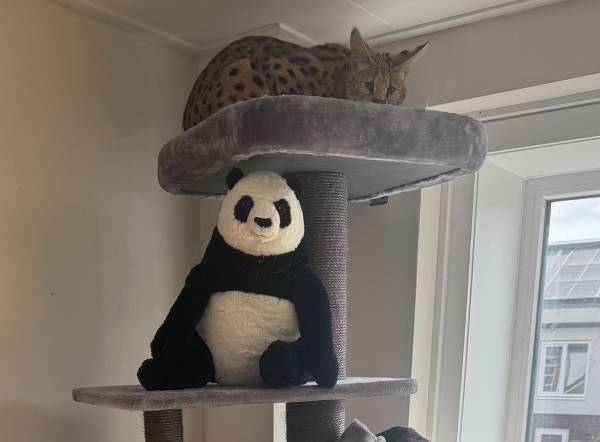
Serval Nini at her former owner's home.
AAP’s role and impact
AAP has unique insights into legal and illegal wildlife trade, and the consequences for animal welfare, conservation, and public health because of our hands-on experience with rescued and confiscated animals.
Through CITES, we are at the table during international negotiations, working with governments and experts to shape wildlife protection and share our practical experience.
Our engagement allows us to:
Share real-world insights from rescue work and confiscated animals to inform global policies.
Raise awareness of the critical need for higher animal welfare standards.
Contribute to international policy on wildlife pet trade.
Advocate for practical solutions like Positive Lists, stronger rules on captive breeding, and better enforcement of existing rules.
Strengthen collaboration with governments, NGOs, and enforcement authorities in Europe.
By participating directly in these negotiations, AAP helps ensure that global trade rules are grounded in practical experience, making a tangible difference for wild animals and their welfare.
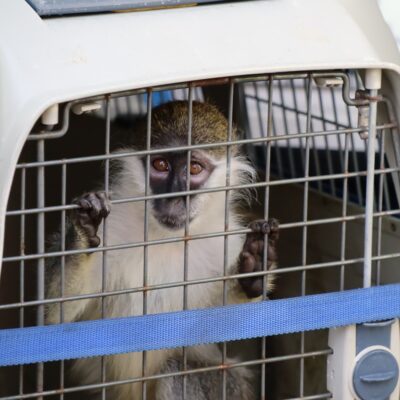
Green grivet monkey Sjaakie was tied to a chain and kept all by himself in a dark attic.
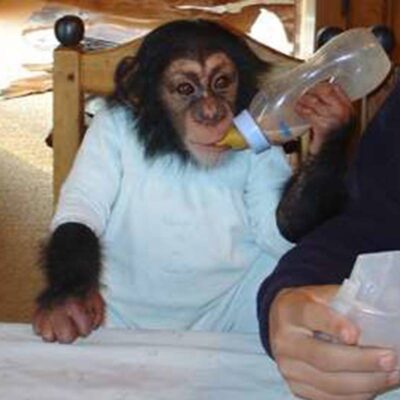
As a baby, chimpanzee Marria was stolen from the wild to be kept as a pet by a Portugese family. She lived with this family for 13 years.
How CITES Works
Species are listed on one of three CITES Appendices depending on the level of conservation threat to the species in the wild and the type of trade measure needed:
Appendix I – Maximum Protection
Species are generally banned from international commercial trade.
Includes species such as all great apes, tigers, and many parrots.
Exceptions are limited and may be allowed for purposes such as scientific research or zoological institutions.
Appendix II – Controlled Trade
Trade is allowed but must be sustainable.
Exporting countries must ensure the trade does not harm the species or their role in the ecosystem.
Covers species such as lions, monkeys not in Appendix I, tortoises, and chameleons.
Appendix III – National Regulations
Species protected by a single country are monitored, with all trade from that country requiring documentation.
Examples include civets, golden jackals, and several fox species from India, anteaters from Guatemala, agoutis from Honduras, and aardwolves from Botswana.
CITES COP20
Negotiations about animal welfare take place during the CITES Conference of the Parties. The latest CoP took place from 24 November to 5 December 2025 in Uzbekistan. This important event has brought together government representatives, NGOs, and other stakeholders from around the world to discuss wildlife trade and conservation.
AAP Animal Advocacy and Protection has attended this 20th conference and used this opportunity to (co)host three side events, reaching a wide range of international governments and stakeholders, highlighting practical solutions to protect wildlife and improve their welfare.
Through these side events, AAP has shared its hands-on expertise, insights from confiscated and rescued animals, and concrete strategies to strengthen wildlife protection worldwide.
AAP's side events at COP20
Uplisting to Release
25 November 2025
CITES and National Action Driving Success for the Barbary Macaque
AAP advocates better laws and regulations throughout Europe. We do this in the individual EU countries and at European level in the European Parliament, because transnational problems require transnational solutions!