In the 1960s, the couple Okko and Riga Reussien took in their first primate in their own home, a nervous squirrel monkey. After this, more and more people brought their primates and other exotic animals to their home in Amstelveen.
At some point it became impossible for Okko and Riga to pay for everything themselves, but stopping with the care of the helpless animals was also not an option. The couple decided to establish a foundation, so they could start raising funds. On April 14, 1972 AAP was a fact.
Carnation greenhouse
In the years that followed, the couple cared for the animals in a former carnation greenhouse at the Legmeerdijk in Amstelveen. In 1992, Okko and Riga stepped down and David van Gennep took the helm. David was no stranger to AAP: he had been involved with the foundation as a volunteer since 1981. With the arrival of David, AAP took a new direction. The organisation became more professional and more involved in improving legislation. As a result, AAP no longer just rescued animals, but also fought very actively to stop the continuing influx of animals.
When the European borders disappeared in 1995, another important choice was made: Europe became the foundation’s new focus point and AAP specialized in exotic mammals from that moment on.
Relocation to Almere
The number of animals in need grew rapidly and therefore AAP moved to Almere in 1996.
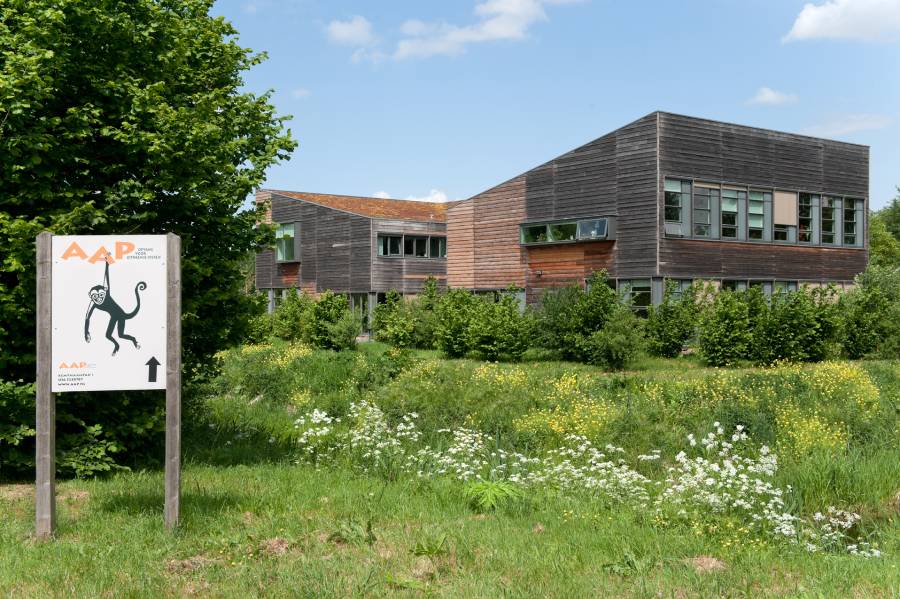
Here, in spacious, green surroundings, a new rescue centre was built. The facilities consist of a chimpanzee complex, primate building, mammal building, quarantine, outdoor enclosures and an office building. Not only the number of animals was growing; the number of staff was also increasing.
AAP in Spain
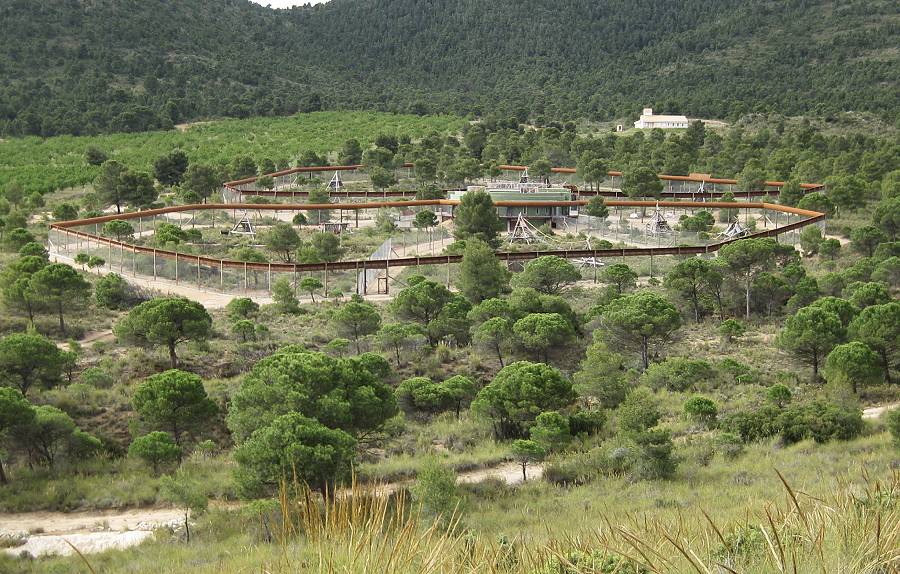
With the focus on issues across Europe, the need for a facility in Spain was growing. In 2009, AAP Spain was opened, a rescue centre in Villena, 50 kilometers west of Alicante.
Although the project was initially used as an annex for animals from Almere, it has since grown into a full-fledged branch of AAP.
Have a look!
Do you want to visit AAP and know more about our work? Join a guided tour or take a unique look behind the scenes.