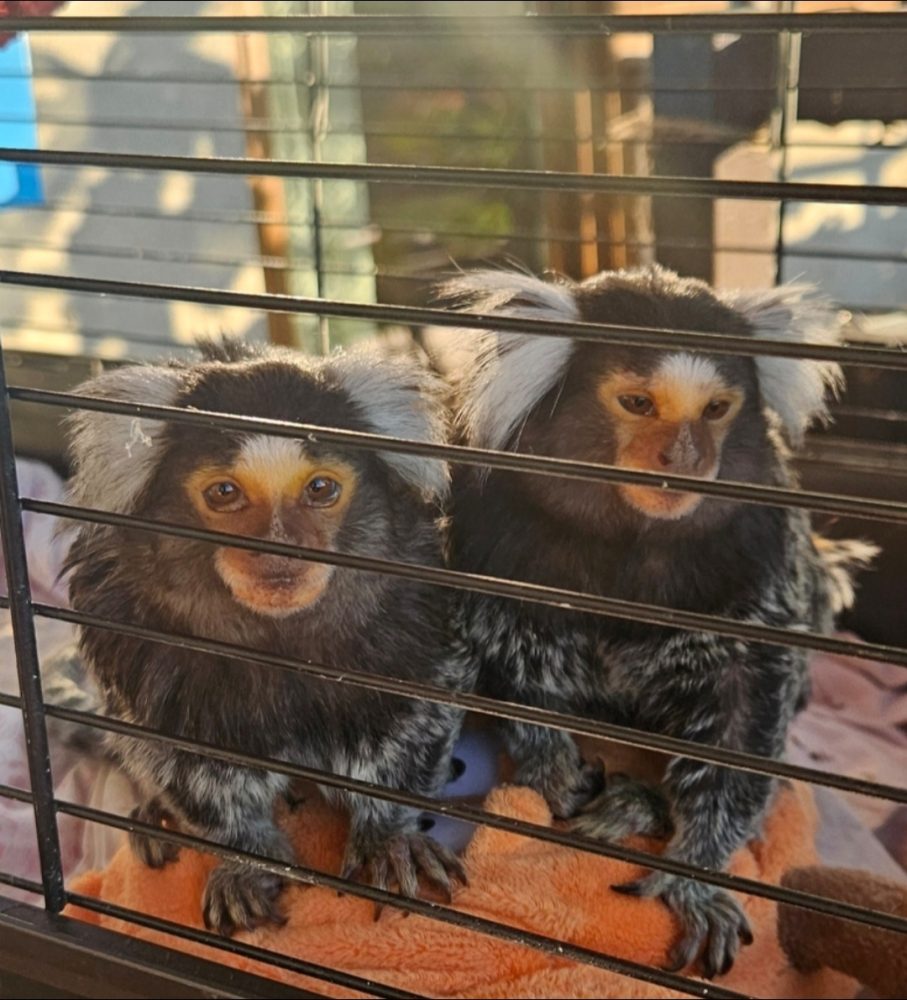

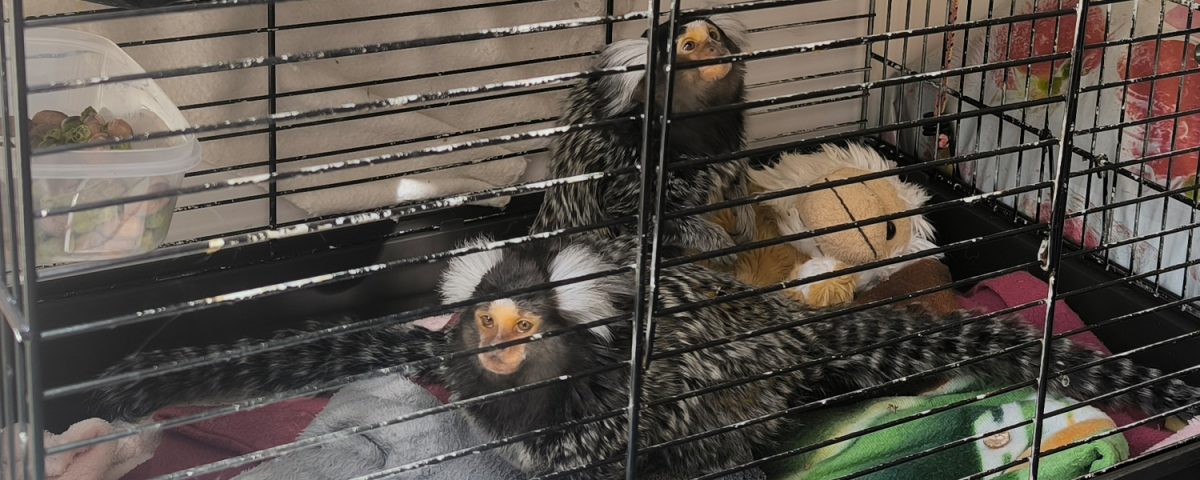

Two common marmosets in a small cage.

Rescued marmosets Minnie and Miko arrive at AAP

Minnie and Miko, a closely bonded pair of common marmosets who were bred in Slovenia and then kept as pets in Croatia, have now arrived at AAP’s rescue centre in Spain. Their story highlights how the lack of consistent, harmonised regulations across European Union member states causes harm to wild animals kept as pets.

An unsuitable life

The adult marmosets, six-year-old Minnie and five-year-old Miko, came from breeders in Slovakia and were transported to Croatia to be kept as pets. The intention was to resell them via classified ads by their owners.

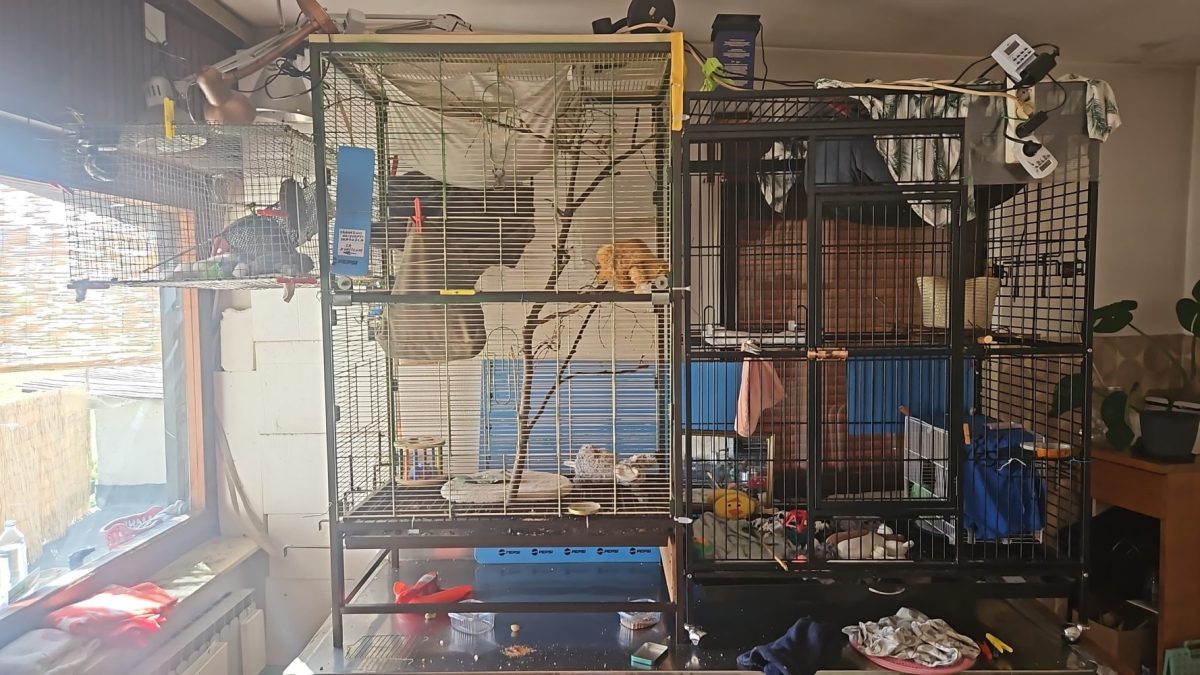
The primates were initially taken in by Vedran Lončarić, who wanted to save them and find them a better home. However, Minnie and Miko were living in facilities that Mr Lončarić, as their caretaker, acknowledged were inadequate.

Although they were fed daily and received basic care, they lacked the stimulation, enrichment, and specialised care that such a complex species requires to maintain good physical and psychological health. As a result, both showed signs of apathy and excessive inactivity.

Eventually, working with the organisation Animal Friends, Mr Lončarić managed to contact AAP to find a permanent solution that would ensure their well-being.

Two common marmosets in a cage.
Minnie and Miko at the facility where they were housed.
A room with cages in it for two common marmosets.
The facilities where Minnie and Miko lived. They had access to an outdoor cage.
A new opportunity for Minnie and Miko

Minnie and Miko will remain together in quarantine at our rescue centre while undergoing necessary veterinary check-ups. Their story represents a second chance for these two common marmosets and serves as a reminder that the effective protection of wild animals in Europe requires clearer, more consistent, and prevention-oriented regulations.

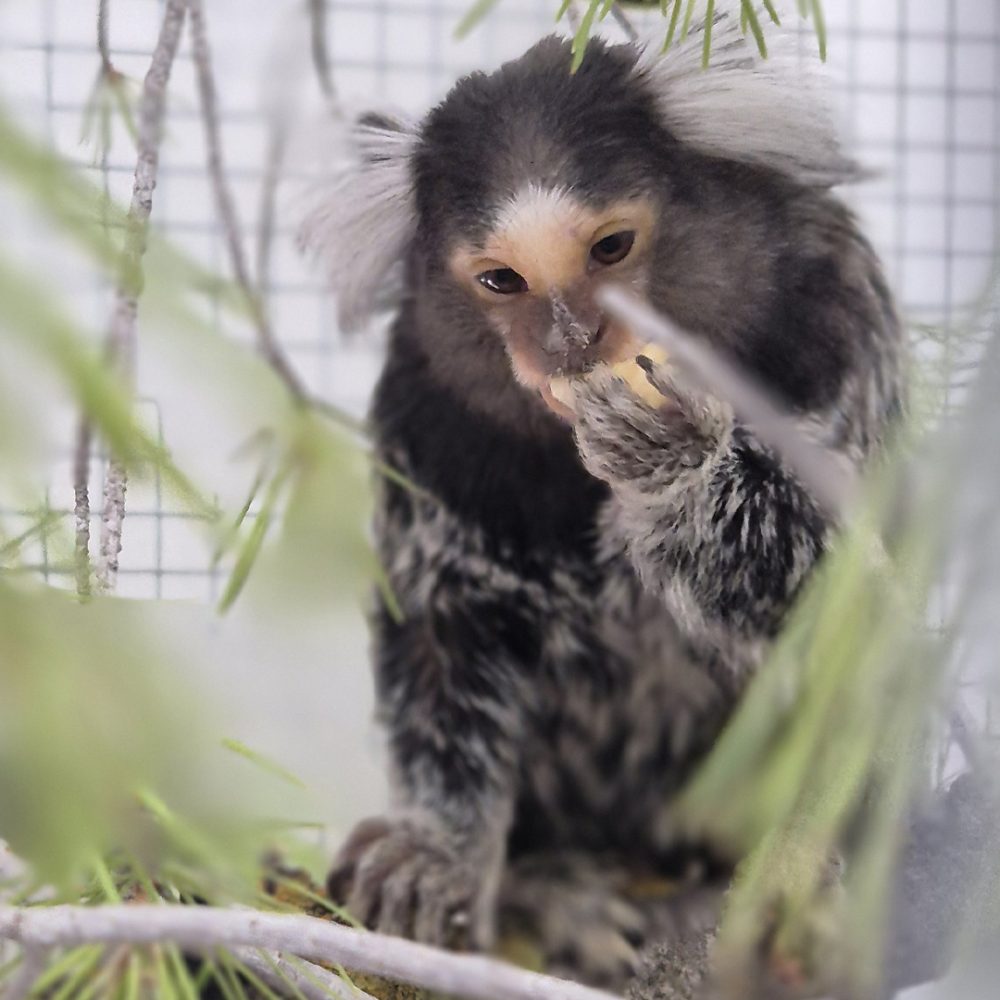
Common marmoset sitting on a branch and eating food.
Minnie upon her arrival at AAP Spain.
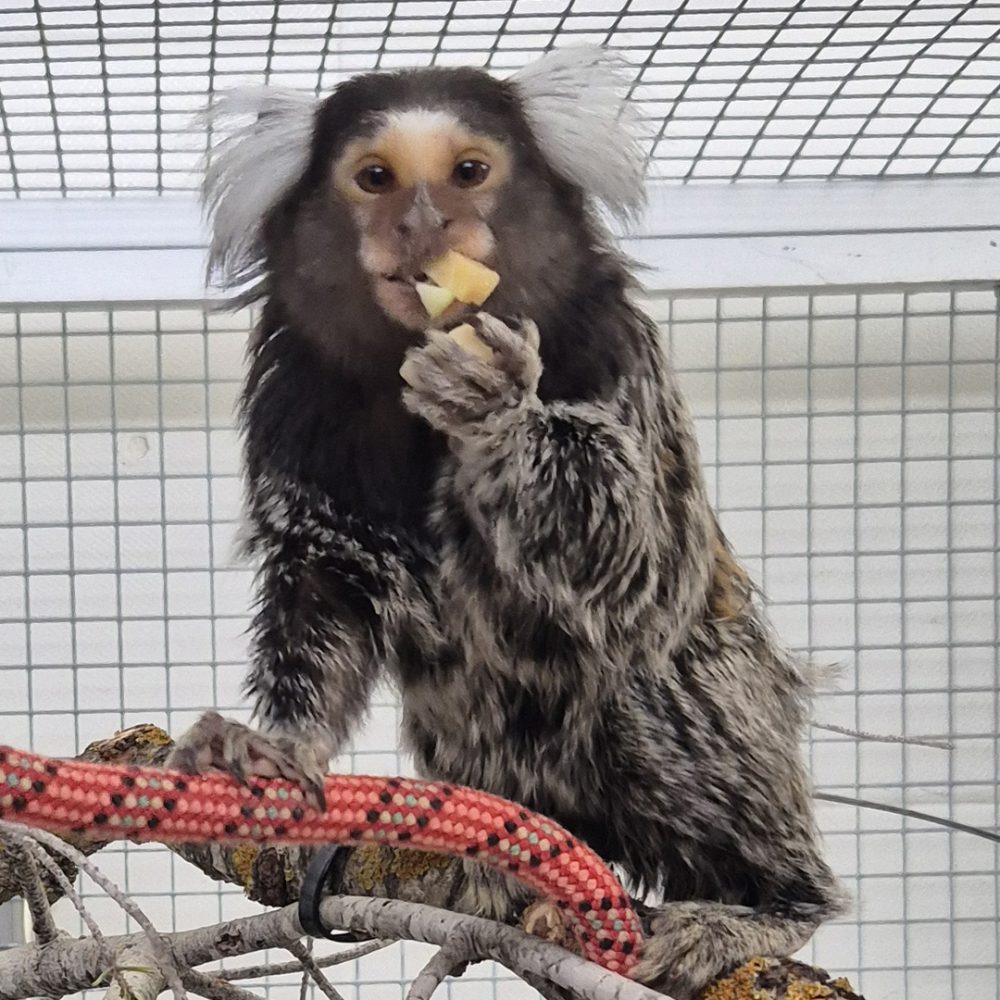
Common marmoset sitting on a rope and eating food, looking into the camera.
Miko in the AAP quarantine area.
Lack of international regulation

The EU remains one of the world’s largest markets and transit hubs for wildlife. In 2023, over 600,000 live animals were seized, including at least 574 species listed under CITES, the global convention on wildlife trade.

A lack of clear documentation initially hindered Minnie and Miko’s international transport and caused a previous rescue attempt to fail, delaying their arrival in Spain by several months.

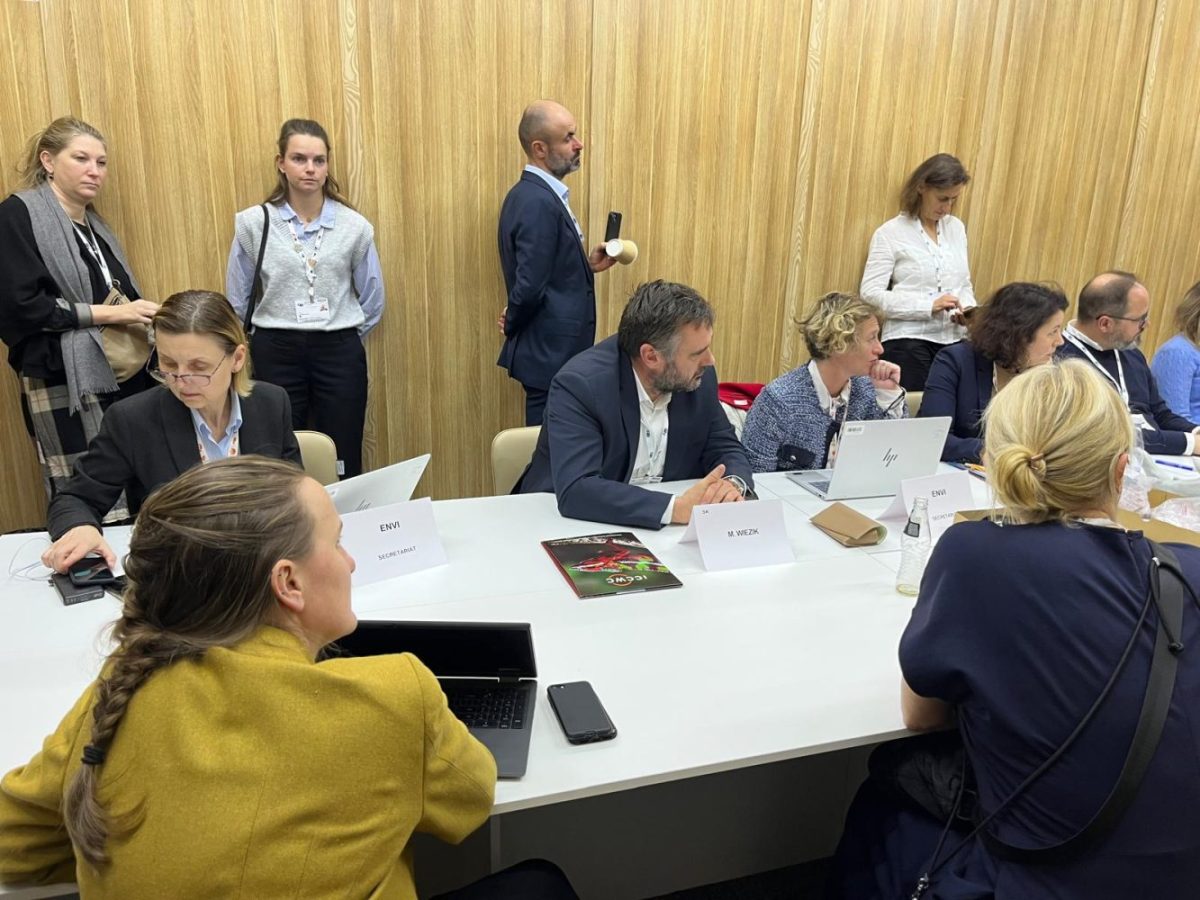
A group of people surrounded around a table.
AAP representative Michèle Hamers (in yellow) at a meeting during CITES CoP20.

However, close collaboration between the relevant Spanish and Croatian authorities, the Croatian organisations involved in the case, and AAP made it possible to resolve the animals’ administrative paperwork and pave the way for their transfer. Thanks to this, Minnie and Miko were finally able to travel to Spain and receive specialised care tailored to their needs.

Video: Minnie and Miko arrive at AAP Spain.
A problem beyond a single case

For AAP, the difficulties encountered during this rescue reflect a structural problem affecting all of Europe: the absence of harmonised rules regarding the keeping of wild animals as pets.

"Although European legislation regulates aspects related to the trade and movement of certain species, each country maintains different approaches regarding which animals can be kept as pets, which ultimately has real consequences for animal welfare"

The need to move towards Positive Lists

AAP believes that cases like this reinforce the need for the European Union to drive more coherent regulation regarding the keeping of wild animals. We advocate for the adoption of Positive Lists – a system whereby only those species whose keeping is compatible with animal welfare, public health, human safety, and biodiversity protection may be kept as pets.

In contrast to the current model – where thousands of species can be traded and kept as pets unless a specific ban exists – Positive Lists offer greater legal certainty for citizens and authorities, facilitate enforcement, and help prevent abandonment, trafficking, and animal suffering.

" We need a preventive system that is harmonised across the European Union. Positive Lists make it possible to prevent wild animals with complex needs from entering the pet trade and to reduce the administrative and welfare issues we repeatedly see during exotic wildlife rescues."

A group of officials sitting in a row on a stage.

Wild Animals Not Pets

The marmoset is the world's smallest monkey. Its tiny size and charming appearance have made it a popular primate. However, keeping a marmoset as a pet is not a good idea; they have very strong temperaments, suffer immensely in captivity, often become more aggressive when confined, and cannot be domesticated.

Other news