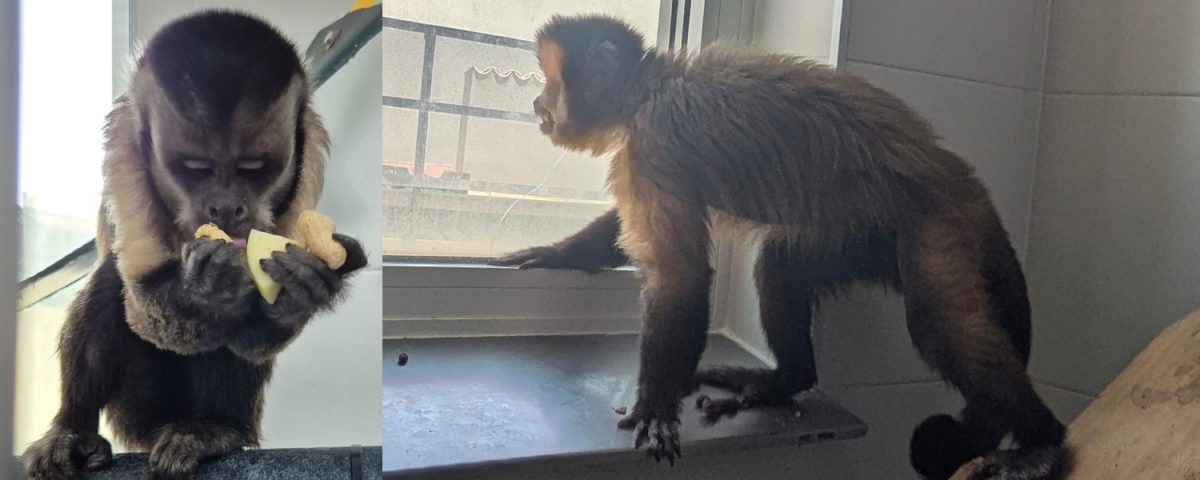

Two black-capped capuchins sitting, eating fruit and looking out of the window.

Two black-capped capuchins arrive at AAP following closure of French zoo

Macchiato and Espresso, two black-capped capuchins who spent years living in concerning conditions at a controversial French zoo, have recently arrived at AAP. They are now being cared for at AAP’s rescue centre in Spain, where they will have the opportunity to recover and rebuild a social life.

Years of uncertainty following zoo closure

The French zoo des 3 Vallées was closed by the authorities in 2021 after several animals escaped. Serious shortcomings in animal care were identified. Despite the closure order, animals remained on site for several years, including Macchiato and Espresso.

During a further inspection in 2025, the French Office for Biodiversity concluded that urgent intervention was necessary. Significant concerns were identified regarding the management of the site and the welfare of the animals still living there. In the months that followed, many animals were relocated with the support of various organisations and rescue centres.

Black-capped capuchin
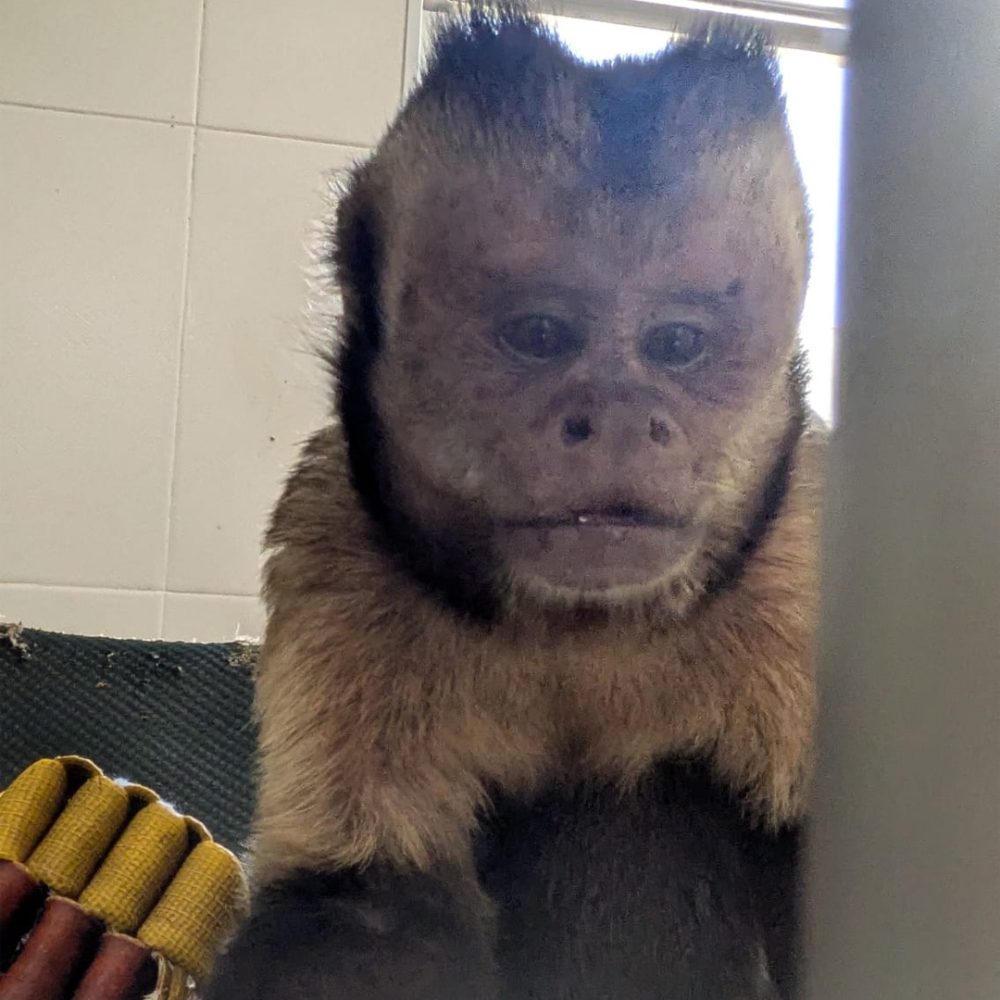
Black-capped capuchin Macchiato at AAPs quarantine.
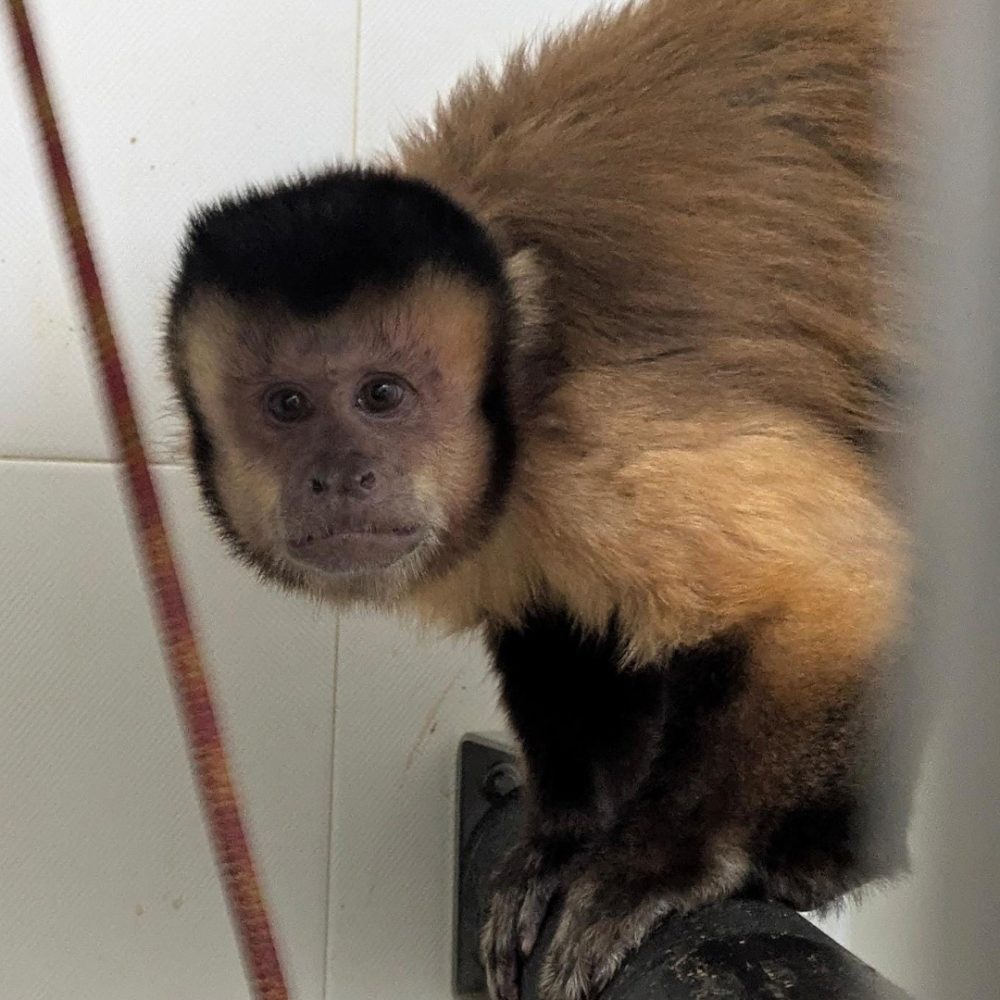
Black-capped capuchin looking into the camera.
And Espresso.

Forced separation

For the remaining animals, the situation deteriorated further in early 2026. Several animals escaped from the park, including two of three black-capped capuchins. One of the animals died during the incident. Another one was transferred to another rescue facility.

This meant that Macchiato and Espresso were separated for several months. For highly social primates, this separation can have a significant negative impact on welfare.

Concerning medical findings

Both animals were recently brought to our rescue centre in Spain, and their reunion at AAP marks an important milestone in their recovery.

Upon arrival, both animals underwent thorough veterinary examinations. The assessments revealed that both Espresso and Macchiato are underweight. In addition, their teeth suggested they may be younger than originally stated.

Both primates display stereotypic behaviour, consisting of repetitive actions that often develop as a result of prolonged stress, boredom or inadequate living conditions.

AAP’s veterinarians observed that Espresso excessively grooms his coat, resulting in several bald patches. He also scratches himself compulsively in stressful situations.

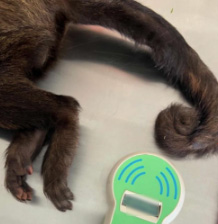
Macchiato is facing several health issues as well. He has damaged teeth with significant tartar build-up, most likely caused by an unsuitable diet in the past. In addition, veterinarians discovered a fractured vertebra and a deformity in his tail, which means he is unable to use it fully.

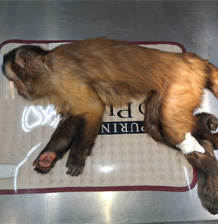
A black-capped capuchin laying on its side on a veterinary table.
Espresso is very thin.
Tail of a black-capped capuchin
Macchiato's tail has bald patches.
Working towards recovery

Over the coming months, the main priorities will be ensuring the duo have rest, medical treatment and a balanced diet. Macchiato and Espresso will also be given the opportunity to further develop their natural behaviours in a safe environment and within a stable social group.

AAP expects that, in time, the two black-capped capuchins can be introduced to Capitán, a black-capped capuchin rescued last year in Huelva, Spain. Capitán recently made a successful recovery from surgery for a herniated disc. By introducing the animals to one another gradually, AAP hopes to establish a social group in which they can express natural species-specific behaviours and enjoy a life that is as close to natural as possible.

For Macchiato and Espresso, their arrival at AAP marks the end of a long period of uncertainty and the beginning of a new future.

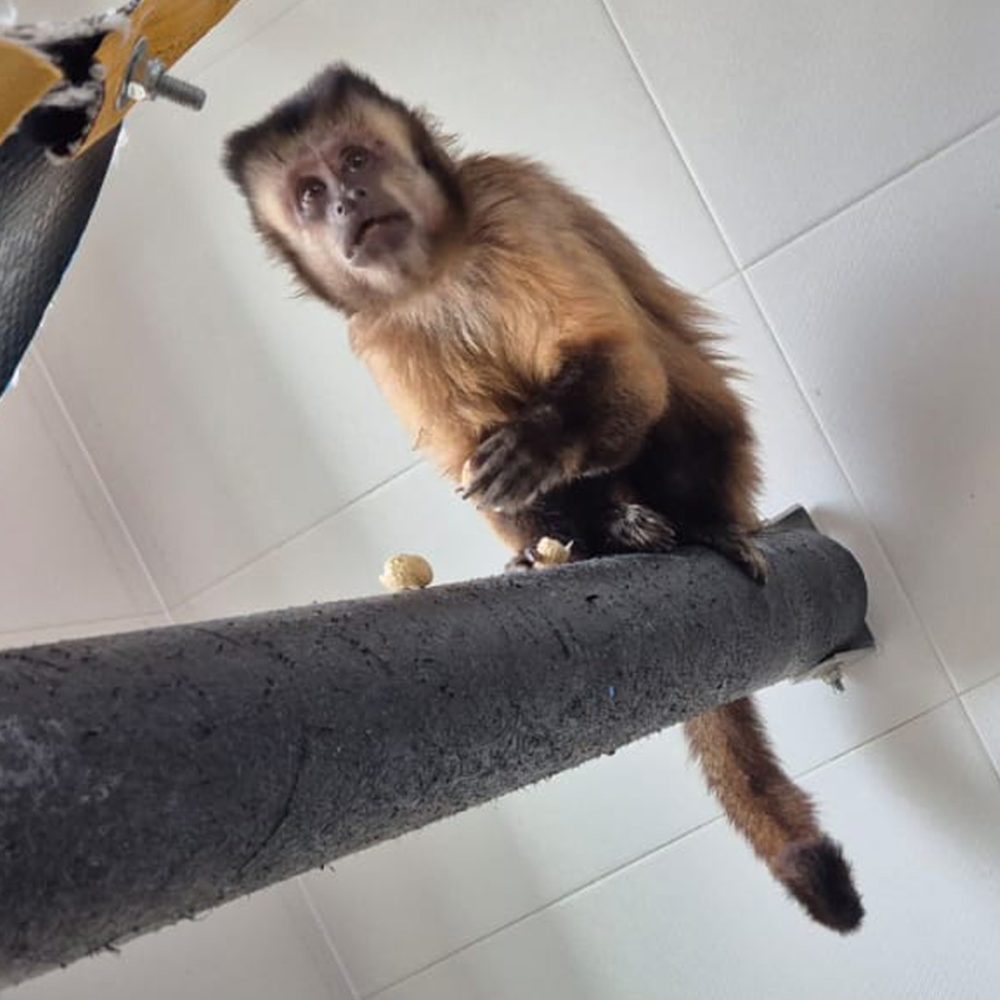
Black-capped capuchin sits on a beam and holds a piece of food.
Espresso right after he arrived at AAP Spain.
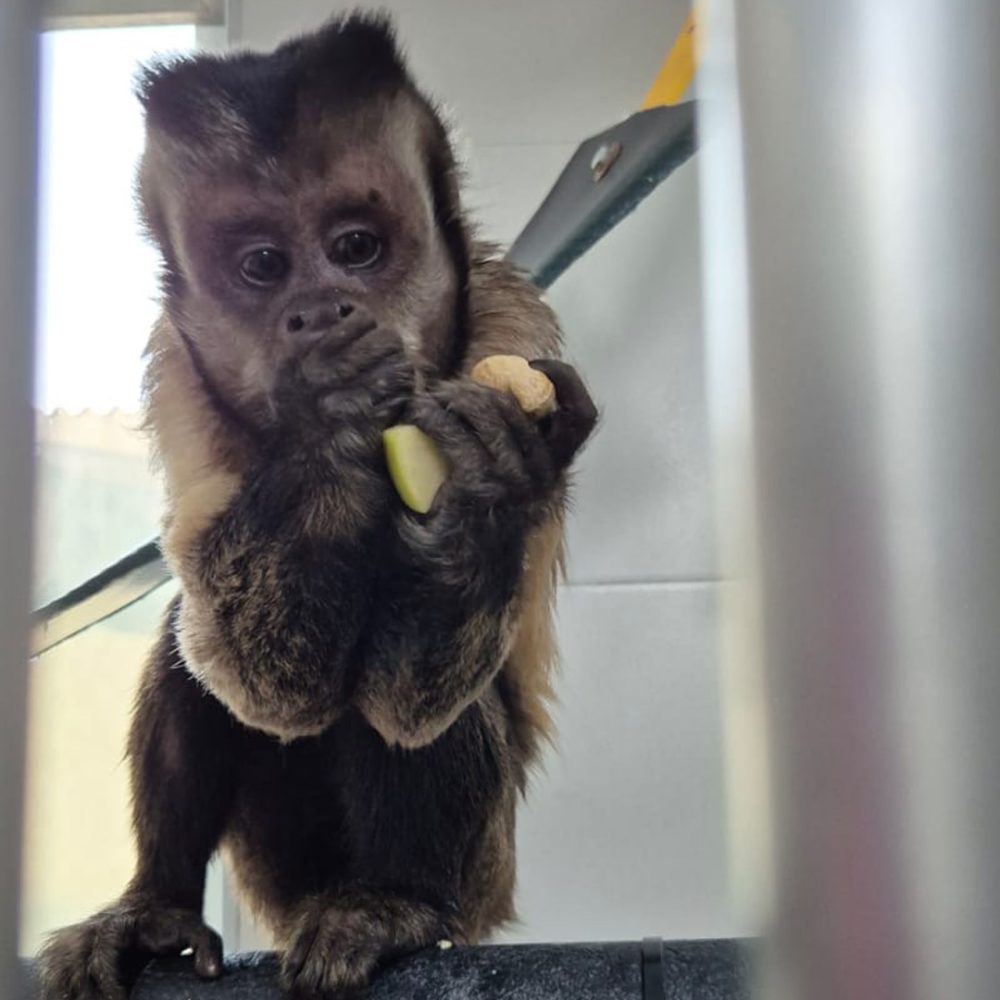
Black-capped capuchin holds a bit of food.
Macchiato at AAP Spain.

Other news