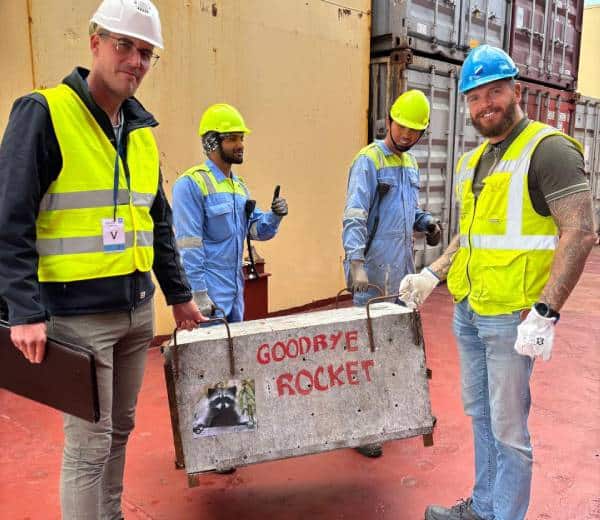
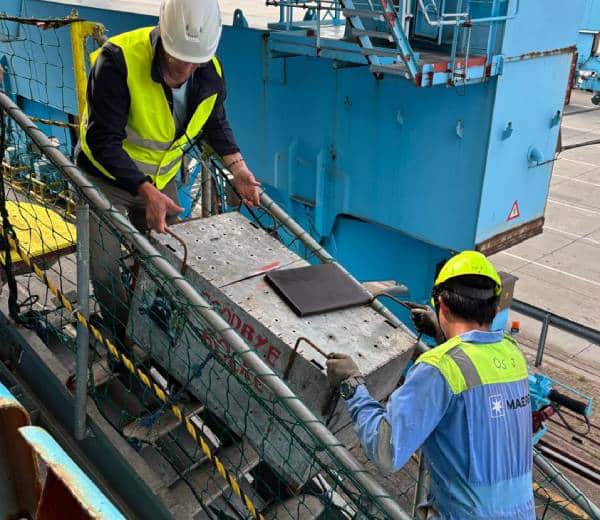
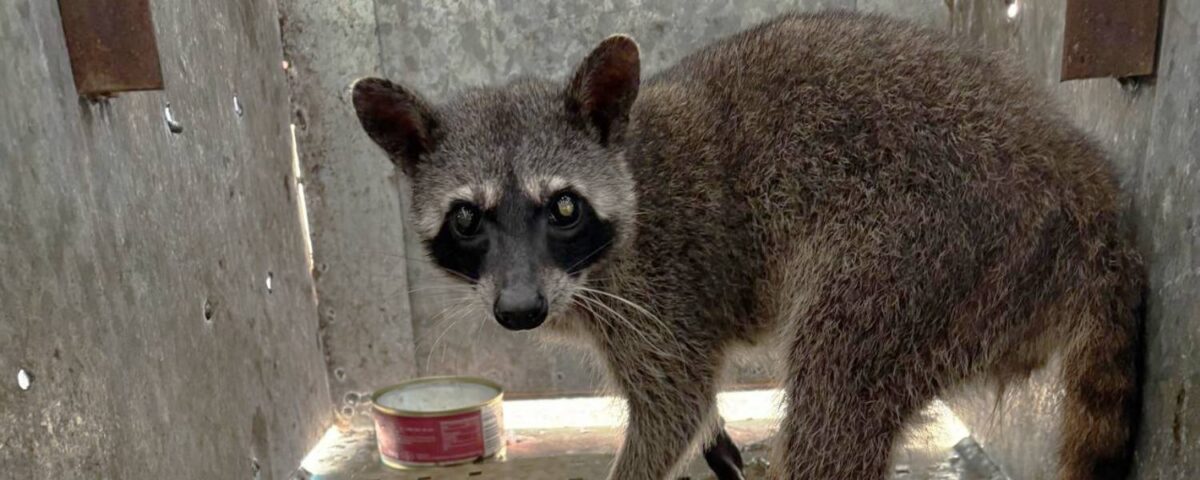

A curious crab-eating raccoon boarded a large container ship in the Port of Panama last month. The crew of the Maersk Bintan discovered the unexpected stowaway during their voyage from Central America to Europe.
To ensure the animal’s safety, the crew built a steel transport crate with ventilation holes. Upon arrival at the Port of Rotterdam, the raccoon—affectionately named “Rocket” by the crew—was safely transferred to our rescue centre in Almere.
Although unusual on a ship, crab-eating raccoons are commonly found in the Port of Panama. Their natural habitat stretches across Central and South America, where they live near water and feed on shrimp, lobsters, frogs, and… crabs. Their name says it all!
Recovering at AAP
The crew cared for Rocket throughout the journey, and we are deeply grateful. Thanks to their efforts, this wild animal now has a second chance.
Rocket—renamed “Rokey” at AAP for administrative purposes—will spend the coming weeks in quarantine at our rescue centre in Almere. During this time, she will be examined by a vet for parasites and given time to recover from her long journey.
Looking for a new home
Meanwhile, we will search for a suitable permanent home for Rokey at one of our outplacement partners. Although AAP currently houses several dozen common raccoons, Rokey cannot be placed with them, as crab-eating raccoons are a distinct species.
Species Information: Crab-Eating Raccoon
- Length: 54–65 cm
- Weight: 3–7 kg
- Average lifespan in the wild: 14 years
- Habitat: From Costa Rica to South America
- Environment: Highly varied
Crab-eating raccoons are smaller and slimmer than their North American and European counterparts. They are excellent climbers and have webbed feet, making them strong swimmers.