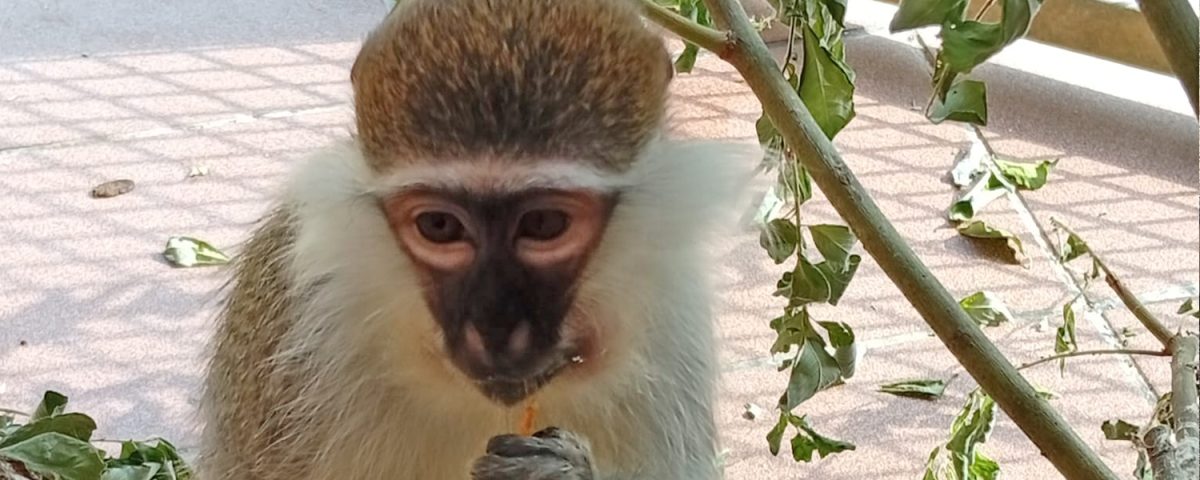
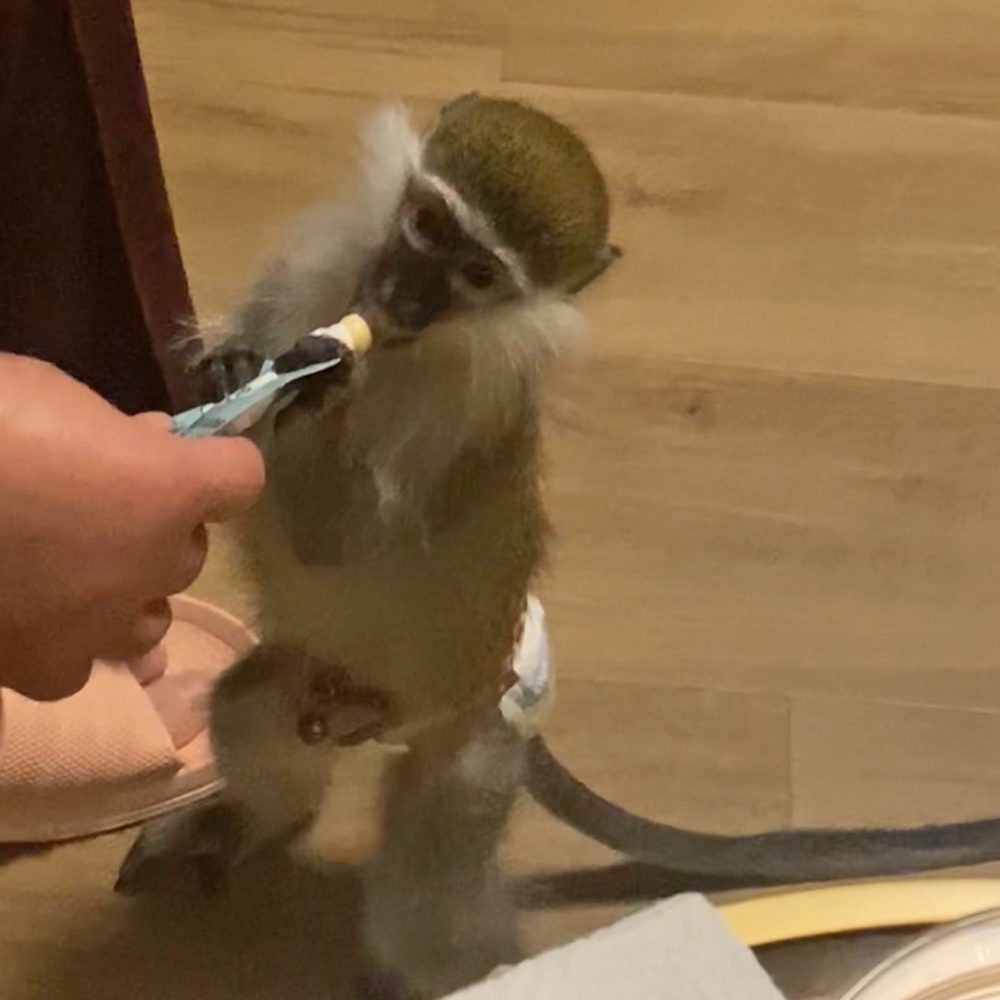
A young grivet monkey (Chlorocebus aethiops) has arrived at AAP’s rescue centre after being surrendered by his owners in Germany, where he was kept as a pet. The primate, who is just over a year old, has been named Marino. His story once again highlights the misguided impressions people have about the desirability and ease of keeping wild animals as pets, the widespread lack of understanding of primates’ complex needs, and the urgent need for stronger legislation across Europe to regulate which animals can and cannot be kept in domestic environments.
Marino’s journey
When he was barely six months old, Marino was purchased in Ukraine and transported to Germany to be kept as a pet. His owners hoped he would make a suitable companion animal, but they soon realised this was not the case, as they became overwhelmed by the practical demands of caring for him.
Despite having paid more than €3,000 to acquire him, they chose not to sell Marino through classified advertisements. Instead, they voluntarily contacted the German authorities to surrender him responsibly. As a result, the case was brought to AAP’s attention, enabling us to take him into our care.
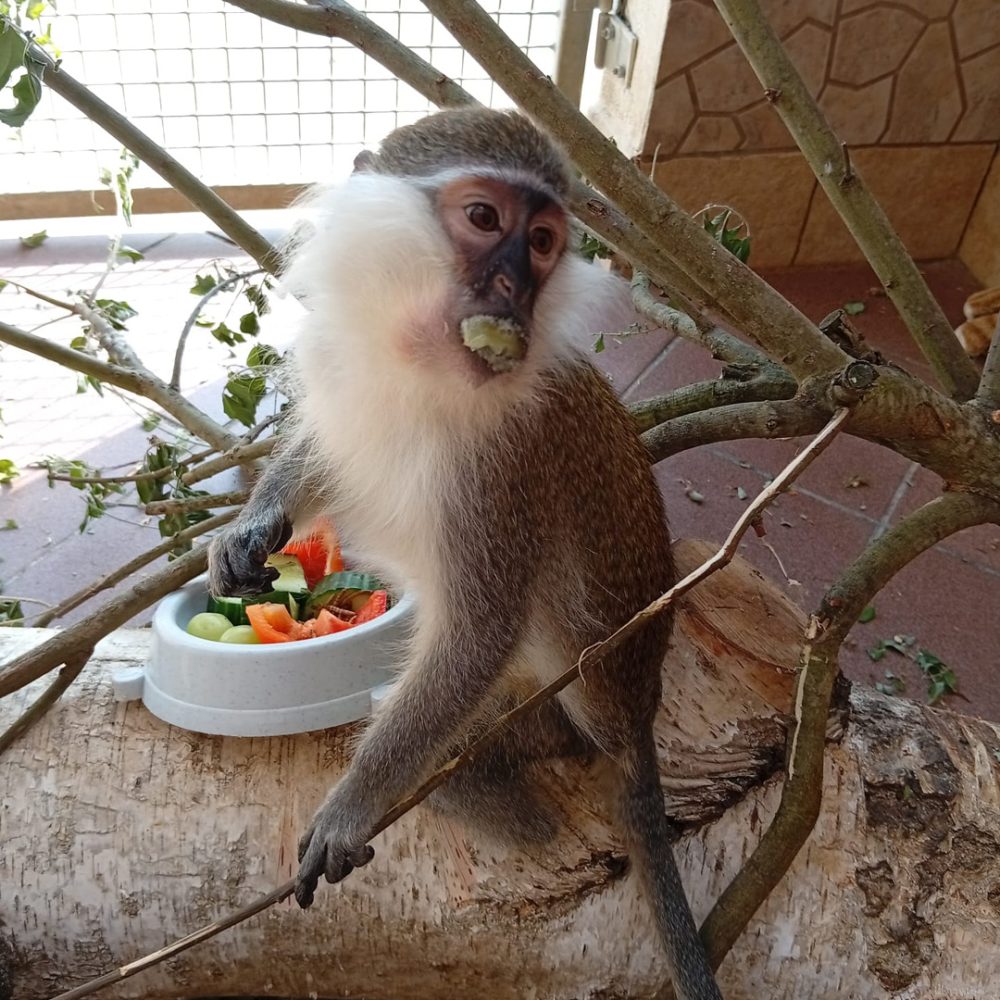
Marino will now undergo the necessary quarantine period to ensure he is in good health. Once this has been completed, we will begin the process of socialising him with other grivet monkeys. Given his young age, AAP is already exploring suitable options to provide him with the social environment he needs.
Serious consequences for wild animals
In the wild, grivet monkeys live in social groups of between 20 and 50 individuals across parts of Africa. Young monkeys remain under their mother’s close care and within their family group for at least their first year of life, during which they acquire the skills and behaviours essential for survival.
In mammals, and particularly in primates, early separation from the mother and a lack of contact with others of their species causes severe and irreversible damage to the young animals’ brains. This often results in stereotypic repetitive behaviours (repetitive, rhythmic movements), chronic anxiety, depression and, in many cases, aggression.
Marino’s health
Sadly, Marino is no exception. His owners soon noticed that, despite his young age, “Over time, he began to show signs of mild aggression, and we realised that a private home was not the right environment for an animal like him.”
Marino’s caregivers at AAP have also observed clear signs of these early-life traumas. He displays a significant amount of abnormal behaviour, including pacing (walking back and forth along the same route in a rhythmic and repetitive manner, without any apparent purpose) and rocking (repetitive movements forwards and backwards and/or from side to side).
We will do everything possible to reduce these abnormal behaviours through specialised care, enrichment activities that enable him to relearn natural behaviours, and socialisation with other primates as soon as it is feasible.
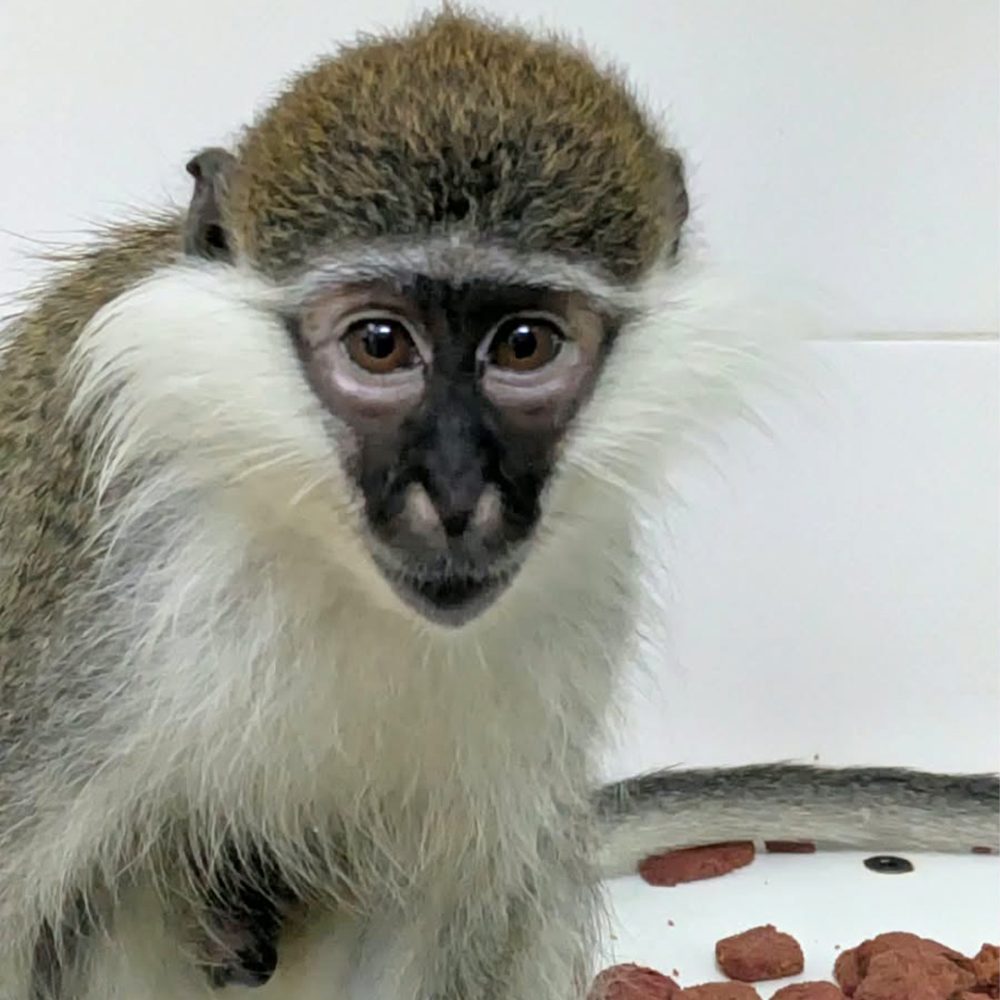
Video: Grivet monkey Marino arrives at AAP Spain
Moving beyond a fragmented legislative approach
The ease with which wild animals are traded and transported across the European market is deeply concerning. It is impossible to adequately meet the needs of these animals in a private setting, regardless of an owner’s experience, resources or commitment. Yet AAP continues to encounter cases in which wild animals are bought and sold across borders, travelling from one European country to another as part of the exotic pet trade.
Given that the European Union remains one of the world’s largest markets and transit hubs for wildlife, and that several EU Member States have already adopted measures based on this regulatory approach, the introduction of a Europe-wide Positive List would provide clear, consistent and harmonised legislation across the European Union. Such a measure would prevent wild animals with complex needs from entering the pet trade and help reduce the administrative, safety, public health and animal welfare challenges that are repeatedly encountered in exotic wildlife rescue cases.